Preheat your oven to 425°F and line a baking tray with parchment paper. Cut the cold butter into ½-inch cubes and set aside—keeping it cold is crucial for creating the tender crumb structure that makes soda bread special. In a small jug or bowl, whisk together the egg, buttermilk, and sugar until well combined, then set aside. Have all your ingredients measured and ready before you begin mixing, as soda bread dough should come together quickly.
In a large mixing bowl, combine the whole wheat flour, all-purpose flour, sifted baking soda, and salt. Whisk these together thoroughly to distribute the leavening agent evenly throughout—this is important because baking soda needs to be evenly dispersed to give you a consistent rise. I like to sift the baking soda separately first to eliminate any lumps that could create dense spots in your bread.
Add the cold butter cubes to the dry mixture and use your fingertips to rub the butter into the flour until the mixture resembles coarse breadcrumbs or sand. This technique keeps the butter cold and distributed throughout, which creates small pockets of steam during baking that give soda bread its characteristic tender, open crumb. Work quickly and don't overwork the mixture—you want visible pea-sized pieces of butter remaining.
Pour the egg and buttermilk mixture from Step 1 into the dry ingredients and stir gently with a wooden spoon or fork just until a soft, shaggy dough forms—do not overwork the dough or knead it, as this will make the bread tough and dense. The dough should be sticky and slightly wetter than regular bread dough, which is normal. Turn the dough out onto a lightly floured surface and gently shape it into an 8-inch circle about 1½ inches thick, being careful not to compress it too much.
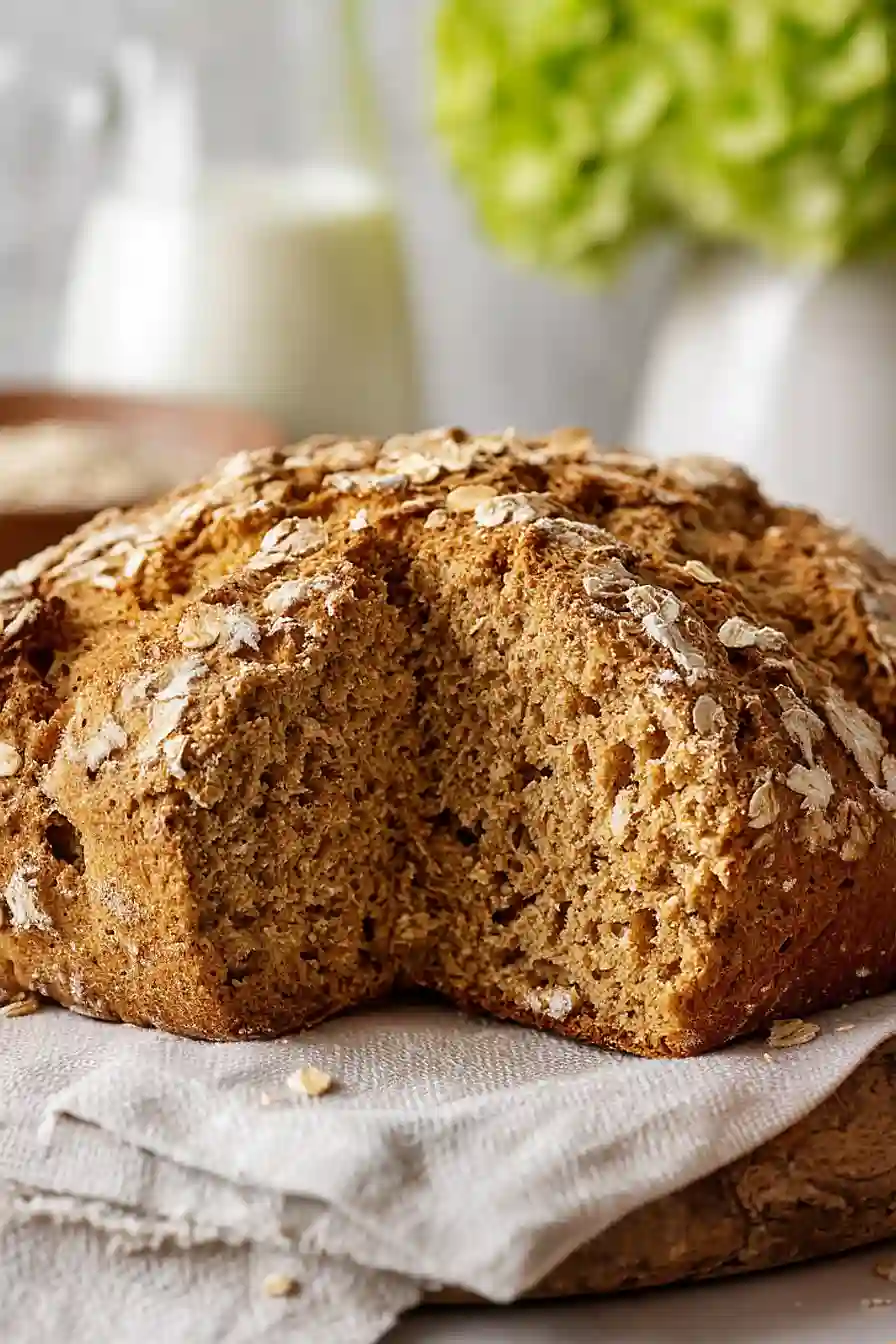
Transfer the shaped dough to your prepared baking tray. Using a sharp knife, cut a deep cross (about ½ inch deep) into the top of the loaf from edge to edge—this traditional scoring helps the bread rise evenly and creates those characteristic quarters. Then poke a small hole in the center of each quarter; these holes allow steam to escape evenly and help with even baking. Brush the top of the loaf lightly with buttermilk and sprinkle with rolled oats if using for that rustic, traditional appearance.
Bake at 425°F for 15 minutes until the top begins to turn golden brown. Then reduce the oven temperature to 400°F and continue baking for 30 minutes more, until the bread is deep golden brown and sounds hollow when tapped on the bottom. The initial high heat sets the crust and helps the bread rise quickly, while the lower heat allows the interior to cook through without over-browning the outside.
Transfer the baked soda bread to a wire cooling rack and let it cool for at least 15-20 minutes before slicing. This resting time allows the crumb to set properly and makes slicing much cleaner. Serve warm or at room temperature with butter, jam, or your favorite spread.