Craving a bowl of soup that’s spicy, tangy, and satisfying but don’t want to spend hours simmering traditional tom yum from scratch? I totally get it. Making authentic Thai soup on a busy weeknight can feel like too much work, especially when you’re trying to get dinner on the table before everyone gets hangry.
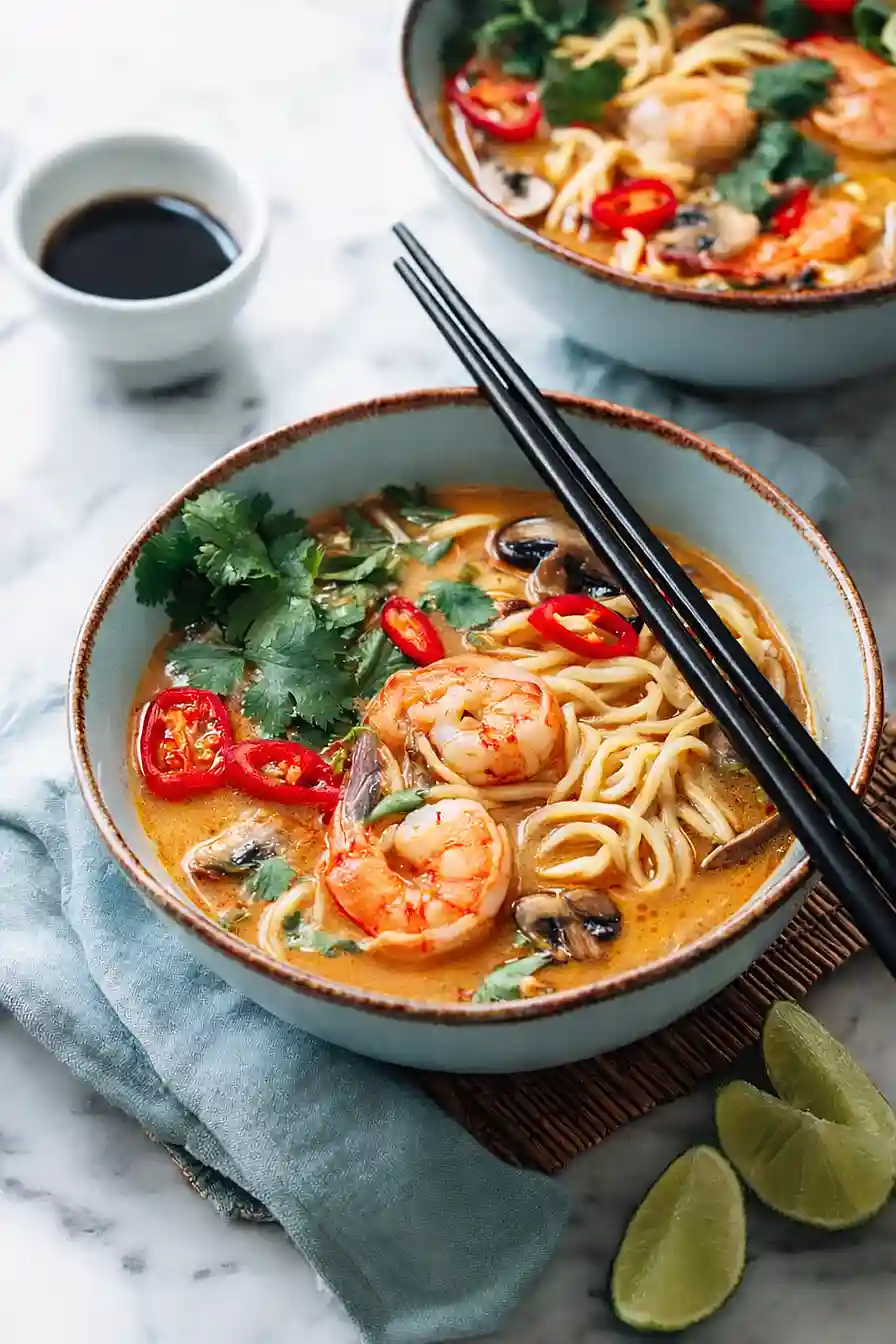
That’s where these tom yum ramen noodles come in. They bring together all those classic Thai flavors—the heat from chili paste, the citrusy punch from lime and lemongrass, and that creamy finish—but use shortcuts like ramen noodles and store-bought pastes to get you from stove to table in under 30 minutes.
Why You’ll Love This Tom Yum Ramen
- Restaurant-quality flavor at home – This recipe brings the bold, tangy, and spicy flavors of Thai tom yum soup right to your kitchen without needing to order takeout.
- Ready in 30-40 minutes – You can have this flavorful ramen on the table in less time than it takes to watch your favorite show, making it perfect for busy weeknights.
- Packed with protein and veggies – The shrimp, mushrooms, tomatoes, and bell peppers make this a satisfying, well-rounded meal in a bowl.
- Customizable spice level – You can easily adjust the chili paste to match your heat preference, whether you like it mild or extra spicy.
- Impressive but easy – The complex flavors make it seem like you spent hours cooking, but it’s actually straightforward enough for any home cook to master.
What Kind of Shrimp Should I Use?
For tom yum ramen, you can use either fresh or frozen shrimp – both work great in this recipe. If you’re going with frozen, just make sure to thaw them completely and pat them dry before adding them to your soup. Size-wise, medium to large shrimp (around 31-40 count per pound) are ideal because they’re meaty enough to stand up to the bold flavors without overcooking. You can buy them already peeled and deveined to save time, or leave the tails on if you want a more traditional presentation – just remember that eating around the tails can be a bit messy when you’re slurping noodles.
Options for Substitutions
This recipe is pretty forgiving when it comes to swaps, so here are some ideas if you need to make changes:
- Tom yum paste: This is really the star ingredient that gives the soup its signature flavor, so I’d recommend keeping it if possible. You can find it at most Asian grocery stores or online.
- Lemongrass paste: If you can’t find lemongrass paste, use 2 stalks of fresh lemongrass instead. Just bruise them with the back of a knife and remove before serving.
- Lime leaves: Fresh or frozen kaffir lime leaves work best, but if you can’t find them, add extra lime zest at the end. The flavor won’t be quite the same, but it’ll still be good.
- Shrimp: Not a fan of shrimp? Try chicken breast, tofu, or even white fish. Just adjust cooking times – chicken needs about 5-7 minutes, tofu can be added at the end, and fish takes about 3-4 minutes.
- Fish sauce: You can use soy sauce instead, though the flavor will be less authentic. Start with 2 tablespoons and add more to taste.
- Evaporated milk: Coconut milk is a great substitute here and actually adds a nice Thai twist. You can also use regular milk or half-and-half in a pinch.
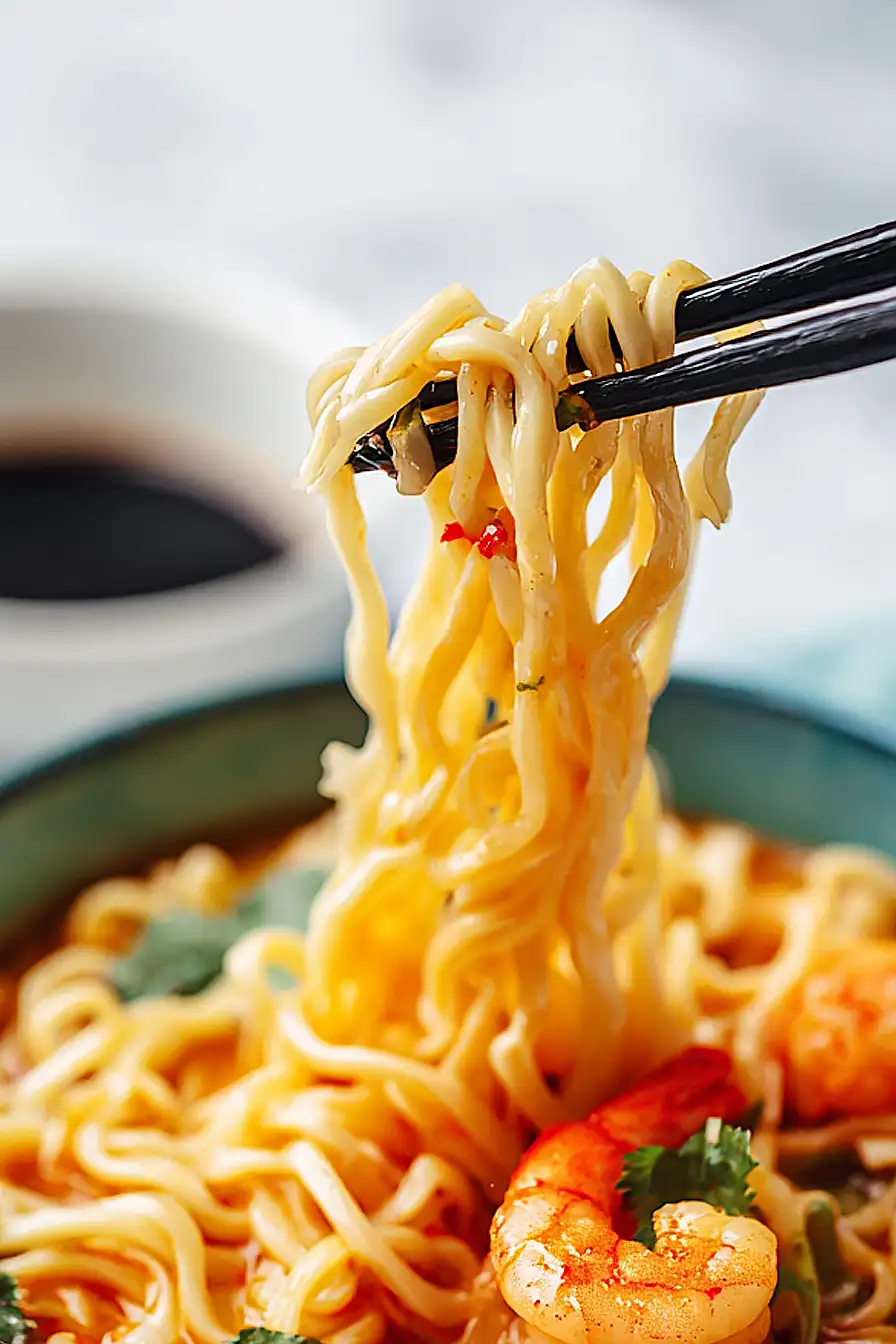
- Ramen noodles: Rice noodles or udon work great here. Cook them according to package directions before adding to the soup.
Watch Out for These Mistakes While Cooking
The biggest mistake when making tom yum ramen is boiling the broth after adding the evaporated milk, which can cause it to curdle and separate – keep the heat at a gentle simmer once the milk goes in.
Overcooking the shrimp is another easy trap to fall into, so pull the pot off the heat as soon as they turn pink and opaque, which usually takes just 2-3 minutes depending on their size.
Don’t add the lime juice too early or cook it for too long, as heat destroys that bright, fresh citrus flavor that makes tom yum so good – stir it in at the very end, right before serving.
Finally, cook your ramen noodles separately according to package directions instead of directly in the soup, which keeps the broth from getting starchy and cloudy.

What to Serve With Tom Yum Ramen?
This spicy, tangy ramen is pretty filling on its own, but I love serving it with some crispy spring rolls or pot stickers on the side for dipping. A simple cucumber salad with rice vinegar helps cool down the heat from the chili paste and adds a nice crunch to the meal. If you want to make it more of a feast, steamed edamame sprinkled with sea salt or some vegetable dumplings work great as starters. You could also add a side of jasmine rice if you’re extra hungry, though the ramen noodles already make this a hearty bowl.
Storage Instructions
Store: This soup is best enjoyed fresh, but you can store the broth and noodles separately in airtight containers in the fridge for up to 3 days. The shrimp will stay good for about 2 days. Just keep in mind that the noodles will soak up more liquid as they sit, so you might want to add a splash of broth when reheating.
Make Ahead: You can prep the broth a day or two in advance and keep it in the fridge, which actually helps the flavors develop even more. Cook the noodles and shrimp fresh when you’re ready to eat for the best texture.
Reheat: Warm the broth gently on the stove over medium heat, then add your noodles and shrimp to heat through. Add a squeeze of fresh lime juice and cilantro right before serving to brighten everything back up.
| Preparation Time | 10-15 minutes |
| Cooking Time | 20-25 minutes |
| Total Time | 30-40 minutes |
| Level of Difficulty | Easy |
| Servings | 4 servings |
Estimated Nutrition
Estimated nutrition for the whole recipe (without optional ingredients):
- Calories: 700-850
- Protein: 50-60 g
- Fat: 15-22 g
- Carbohydrates: 85-100 g
Ingredients
For the soup base:
- 4 cups broth (I use Swanson chicken broth for a consistent base)
- 2 inch ginger (peeled and sliced into 1/4-inch coins)
- 2 tbsp tom yum paste (I prefer Maepranoy brand for authentic heat)
- 8 lime leaves
- 3 tbsp lemongrass paste
- 1 tsp brown sugar
- 1 clove garlic, minced
For the finishing additions:
- 6 oz mushrooms (sliced into 1/4-inch thick pieces)
- 4 tbsp chili paste
- 4 tbsp fish sauce (I always use Red Boat for its clean, salty depth)
- 2 roma tomatoes (quartered into 1-inch wedges)
- 0.5 red bell pepper
- 12 oz shrimp (peeled and deveined with tails left on)
- 0.75 cup evaporated milk (adds a signature creamy Thai street-food texture)
- 3 tbsp cilantro
- 4 tbsp lime juice (freshly squeezed for necessary acidity)
For the noodles:
- 6 oz ramen
Step 1: Build the Aromatic Broth Base
- 4 cups broth
- 2 inch ginger, peeled and sliced
- 2 tbsp tom yum paste
- 8 lime leaves
- 3 tbsp lemongrass paste
- 1 tsp brown sugar
- 1 clove garlic, minced
- 0.5 cup water
Pour the broth into a large pot and bring to a gentle simmer over medium heat.
Add the ginger coins, tom yum paste, lemongrass paste, lime leaves, garlic, brown sugar, and 1/2 cup water.
Stir well to dissolve the pastes evenly throughout the liquid.
Let this simmer for 10-15 minutes, allowing the aromatics to infuse deeply and the flavors to meld together.
I like to let it go the full 15 minutes when I have time—the ginger becomes more mellow and the lemongrass flavor really blooms into the broth.
Step 2: Add Vegetables and Build Depth
- aromatic broth from Step 1
- 6 oz mushrooms, sliced
- 4 tbsp chili paste
- 2 roma tomatoes, quartered
- 0.5 red bell pepper, sliced
- 4 tbsp fish sauce
Add the sliced mushrooms, chili paste, tomato wedges, and red bell pepper to the aromatic broth from Step 1.
Stir in the fish sauce, distributing it evenly throughout.
Simmer for 5 minutes until the mushrooms become tender and the vegetables begin to soften.
The vegetables will release their juices and further enrich the broth’s flavor profile.
Step 3: Cook the Shrimp and Add Creaminess
- vegetable broth mixture from Step 2
- 12 oz shrimp, peeled and deveined
- 0.75 cup evaporated milk
Add the peeled and deveined shrimp to the simmering broth, then pour in the evaporated milk while stirring gently.
Maintain a gentle heat—you want the mixture to stay hot but never boil, as this can cause the milk to separate or the shrimp to become rubbery.
Cook for about 2 minutes, just until the shrimp turn opaque and pink.
I always watch carefully during this step because overcooked shrimp will become tough and chewy, which throws off the entire dish.
Step 4: Finish with Bright, Fresh Flavors
- shrimp broth from Step 3
- 3 tbsp cilantro, chopped
- 4 tbsp lime juice, freshly squeezed
Remove the pot from heat and stir in the fresh cilantro and lime juice.
Taste the broth and adjust seasoning as needed—tom yum should have a balance of spicy, sour, salty, and creamy notes.
The lime juice adds necessary brightness and acidity that cuts through the richness of the milk.
Step 5: Prepare and Serve Over Noodles
- 6 oz ramen noodles
- finished tom yum broth from Step 4
While the broth finishes, cook the ramen noodles according to package directions in a separate pot of salted boiling water.
Drain the noodles well and divide them between serving bowls.
Ladle the hot tom yum broth with shrimp and vegetables over the noodles, ensuring each bowl gets plenty of shrimp and mushrooms.
Serve immediately with lime wedges on the side for additional brightness and acidity.
Shrimp Tom Yum Ramen Noodles
Ingredients
Method
- Pour the broth into a large pot and bring to a gentle simmer over medium heat. Add the ginger coins, tom yum paste, lemongrass paste, lime leaves, garlic, brown sugar, and 1/2 cup water. Stir well to dissolve the pastes evenly throughout the liquid. Let this simmer for 10-15 minutes, allowing the aromatics to infuse deeply and the flavors to meld together. I like to let it go the full 15 minutes when I have time—the ginger becomes more mellow and the lemongrass flavor really blooms into the broth.
- Add the sliced mushrooms, chili paste, tomato wedges, and red bell pepper to the aromatic broth from Step 1. Stir in the fish sauce, distributing it evenly throughout. Simmer for 5 minutes until the mushrooms become tender and the vegetables begin to soften. The vegetables will release their juices and further enrich the broth's flavor profile.
- Add the peeled and deveined shrimp to the simmering broth, then pour in the evaporated milk while stirring gently. Maintain a gentle heat—you want the mixture to stay hot but never boil, as this can cause the milk to separate or the shrimp to become rubbery. Cook for about 2 minutes, just until the shrimp turn opaque and pink. I always watch carefully during this step because overcooked shrimp will become tough and chewy, which throws off the entire dish.
- Remove the pot from heat and stir in the fresh cilantro and lime juice. Taste the broth and adjust seasoning as needed—tom yum should have a balance of spicy, sour, salty, and creamy notes. The lime juice adds necessary brightness and acidity that cuts through the richness of the milk.
- While the broth finishes, cook the ramen noodles according to package directions in a separate pot of salted boiling water. Drain the noodles well and divide them between serving bowls. Ladle the hot tom yum broth with shrimp and vegetables over the noodles, ensuring each bowl gets plenty of shrimp and mushrooms. Serve immediately with lime wedges on the side for additional brightness and acidity.