Pour the broth into a large pot and bring to a gentle simmer over medium heat. Add the ginger coins, tom yum paste, lemongrass paste, lime leaves, garlic, brown sugar, and 1/2 cup water. Stir well to dissolve the pastes evenly throughout the liquid. Let this simmer for 10-15 minutes, allowing the aromatics to infuse deeply and the flavors to meld together. I like to let it go the full 15 minutes when I have time—the ginger becomes more mellow and the lemongrass flavor really blooms into the broth.
Add the sliced mushrooms, chili paste, tomato wedges, and red bell pepper to the aromatic broth from Step 1. Stir in the fish sauce, distributing it evenly throughout. Simmer for 5 minutes until the mushrooms become tender and the vegetables begin to soften. The vegetables will release their juices and further enrich the broth's flavor profile.
Add the peeled and deveined shrimp to the simmering broth, then pour in the evaporated milk while stirring gently. Maintain a gentle heat—you want the mixture to stay hot but never boil, as this can cause the milk to separate or the shrimp to become rubbery. Cook for about 2 minutes, just until the shrimp turn opaque and pink. I always watch carefully during this step because overcooked shrimp will become tough and chewy, which throws off the entire dish.
Remove the pot from heat and stir in the fresh cilantro and lime juice. Taste the broth and adjust seasoning as needed—tom yum should have a balance of spicy, sour, salty, and creamy notes. The lime juice adds necessary brightness and acidity that cuts through the richness of the milk.
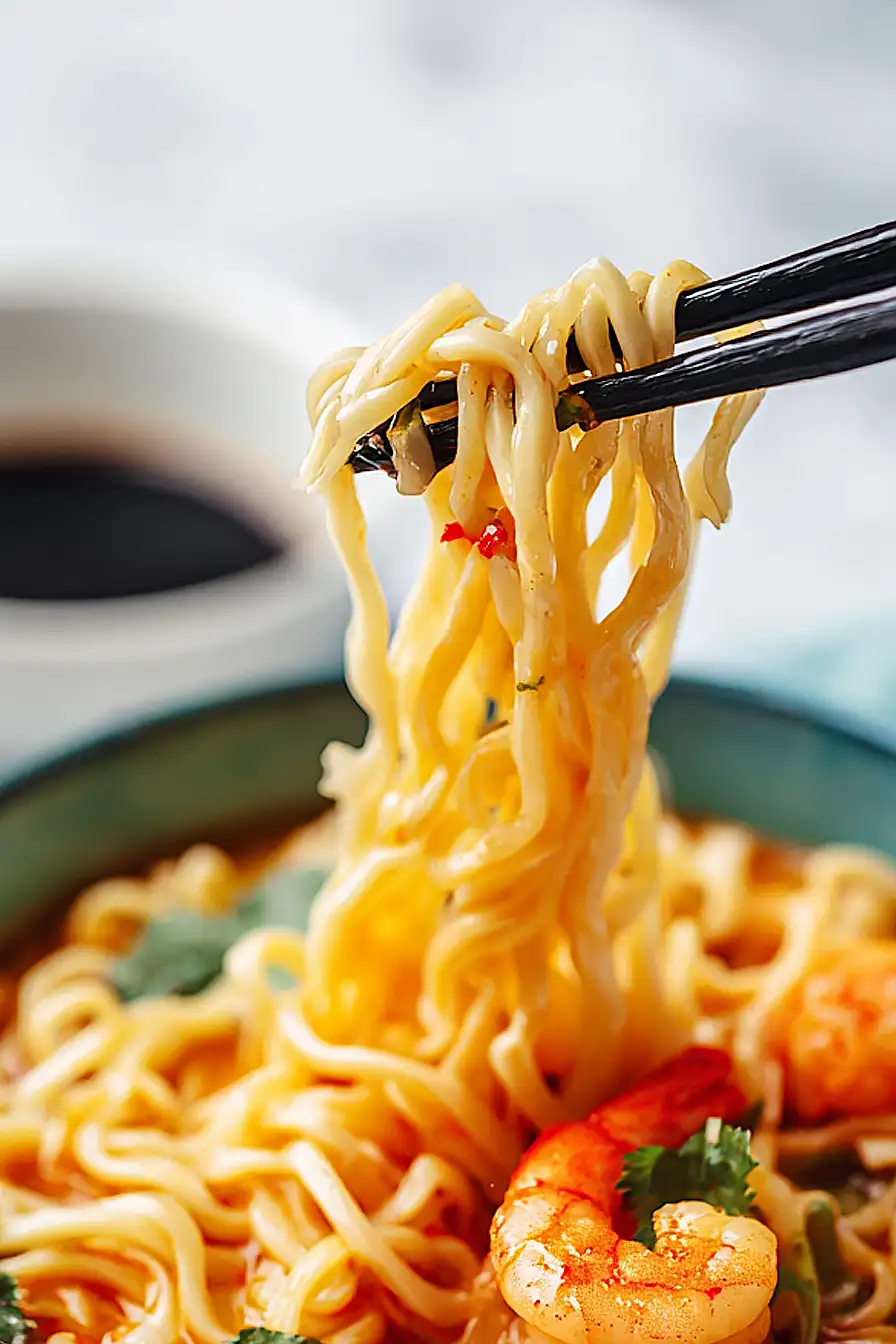
While the broth finishes, cook the ramen noodles according to package directions in a separate pot of salted boiling water. Drain the noodles well and divide them between serving bowls. Ladle the hot tom yum broth with shrimp and vegetables over the noodles, ensuring each bowl gets plenty of shrimp and mushrooms. Serve immediately with lime wedges on the side for additional brightness and acidity.