Line a baking sheet with a silicone mat and set aside. Sift the almond flour twice to remove any clumps and ensure a fine, smooth texture. In a medium bowl, combine the sifted almond flour with the powdered sugar (the first 7 oz portion) and whisk together thoroughly. This dry mixture is the foundation of the macaron shells, and the double-sifting of almond flour is crucial for achieving smooth, flat-topped macarons without cracks or feet issues.
In a clean, grease-free bowl, combine the room temperature egg whites and cream of tartar. Using an electric mixer on medium-high speed, beat until the mixture becomes frothy and soft peaks begin to form. Gradually add the granulated sugar (1.85 oz) while continuing to beat, then add 2-3 drops of red gel food coloring. Continue beating until stiff, glossy peaks form—the meringue should hold its shape completely when you lift the whisk. I find that room temperature egg whites whip to much greater volume than cold ones, which is essential for creating those signature macaron feet.
Add the meringue to the dry ingredient mixture from Step 1 in two additions. Using a spatula, fold gently but deliberately, pressing the meringue against the side of the bowl to incorporate it slowly. This technique, called macaronage, is critical—you want to deflate the meringue just enough to create a smooth, lava-like batter that flows slowly. The batter should fall in a ribbon from the spatula; if it's too thick, continue folding a few more times. Transfer the batter to a piping bag fitted with a round 10mm tip.
Pipe 1-inch circles of batter onto the prepared baking sheet, spacing them about 1 inch apart. Once piped, firmly tap the bottom of the baking sheet 5-6 times on the counter to release air bubbles and help the macarons spread slightly into even circles. Use a toothpick to pop any remaining surface bubbles you can see. Let the piped shells sit at room temperature for about 1 hour until they develop a dry skin on top—this is essential for creating the characteristic ruffled feet during baking. I like to gently touch a shell with my finger; when ready, it should feel dry but the insides remain soft.
While the shells rest, preheat your oven to 280°F. Once the shells have rested and the oven is ready, place the baking sheet in the oven. Bake for 15 minutes total, rotating the sheet 180 degrees every 5 minutes to ensure even baking. The shells are done when they have formed distinctive feet around the base but the tops remain smooth and slightly domed. Remove from the oven and let cool completely on the baking sheet—do not transfer them while still warm or they may crack.
While the shells cool, pulverize the freeze-dried strawberries into a fine powder—a food processor works perfectly for this. In a medium bowl, beat the softened unsalted butter on medium-high speed for 2-3 minutes until it's pale and fluffy. Add the strawberry powder and half of the sifted powdered sugar (2.25 oz) and beat for another 2-3 minutes. Add the remaining powdered sugar (2.25 oz) and continue beating for 5-6 minutes total until the filling is light, creamy, and well-combined. If the mixture seems too stiff, add the heavy cream a little at a time while beating, followed by the vanilla extract, until you achieve a smooth, spreadable consistency.
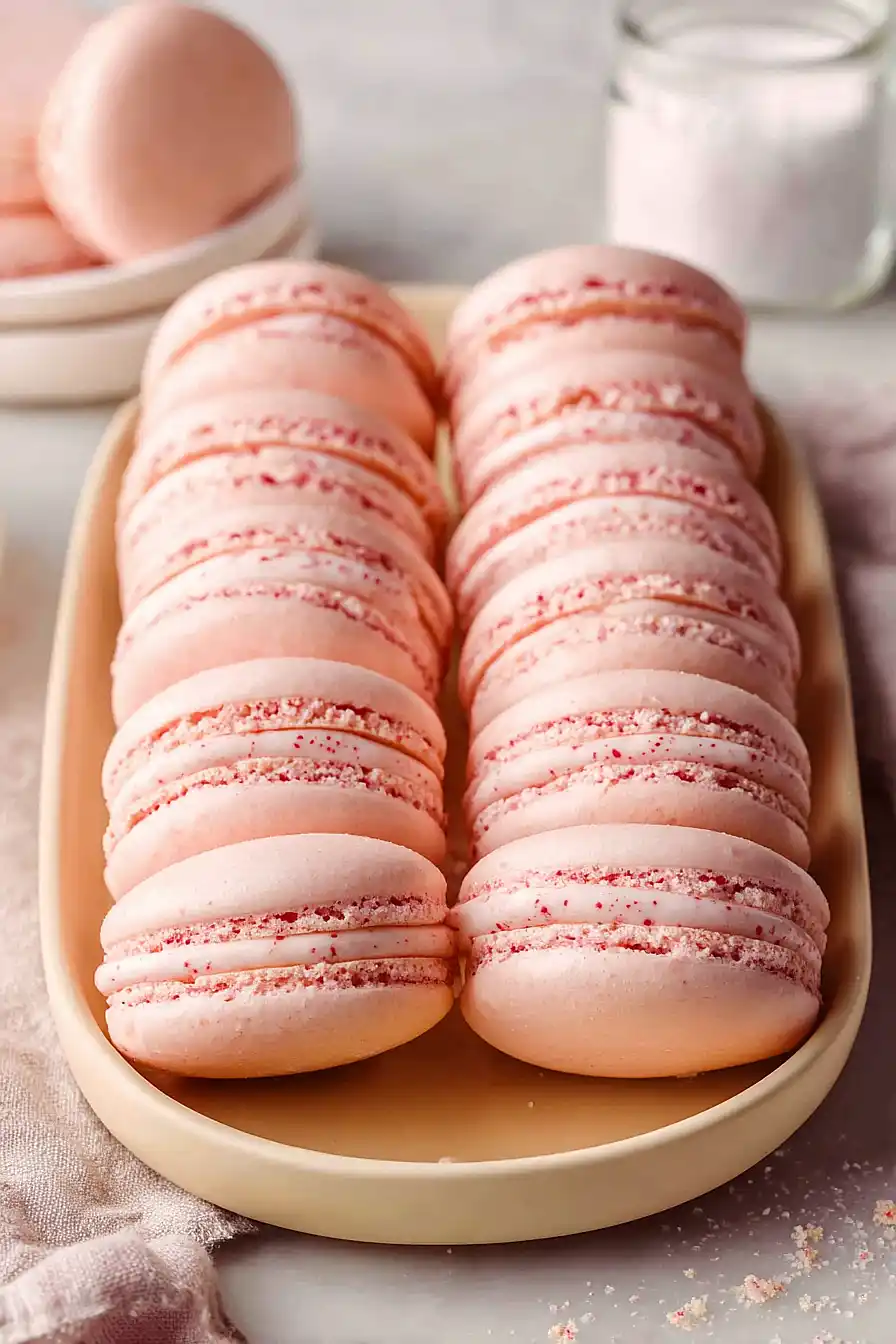
Once the shells are completely cool, carefully remove them from the silicone mat. Match shells into pairs of similar size. Pipe or spread a small amount of the strawberry buttercream filling from Step 6 onto the flat side of one shell, then gently press another shell on top, flat-side down, to create a sandwich. For the best texture and flavor development, let the assembled macarons rest in an airtight container at room temperature for 24 hours before serving—this allows the flavors to meld and the shells to soften slightly into the ideal tender-but-not-chewy texture.