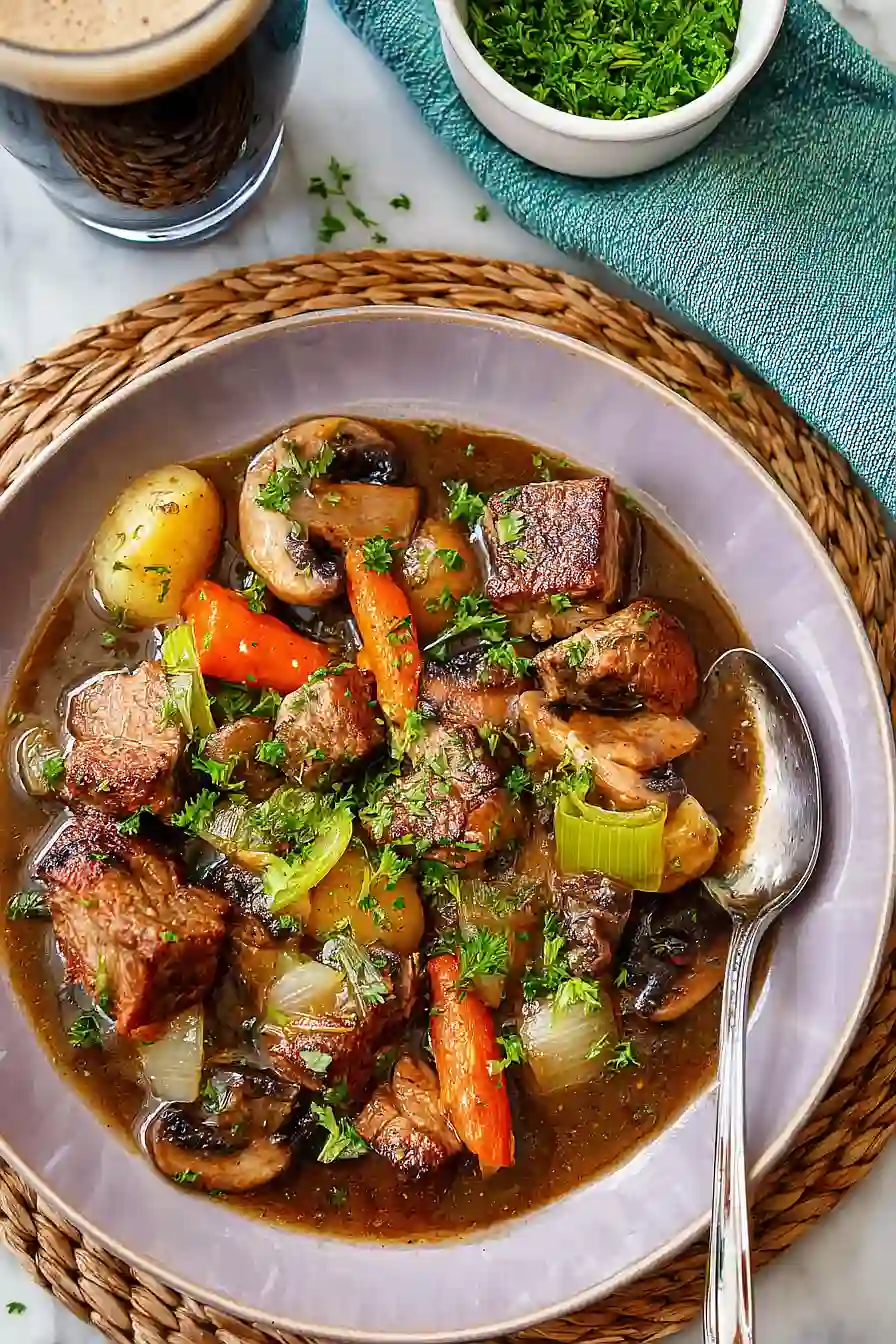
Cut the pork shoulder into 1-inch chunks and set aside. Dice the carrot into 1/2-inch pieces, cut the turnips into 1-inch cubes, dice the onion, chop the celery, mince the garlic, and slice the mushrooms. Having everything prepped before cooking ensures smooth execution and prevents overcooking any component. I like to arrange everything in small bowls so I can add ingredients quickly without fumbling mid-cook.
Melt 2 tablespoons of butter in a large pot or Dutch oven over medium-high heat. Pat the pork chunks dry and season generously with salt and pepper. Once the butter foams, working in batches if needed, sear the pork until browned on all sides (about 8-10 minutes total). This browning creates a flavorful crust and builds the foundation of the stew's depth. Remove the seared pork to a plate and set aside.
Lower the heat to medium, add the remaining 3 tablespoons of butter to the pot, and let it melt. Add the prepared mushrooms, carrots, turnips, onion, and celery, stirring occasionally and cooking for 4-5 minutes until the vegetables begin to soften and release their flavors. The lower heat prevents burning while allowing the vegetables to caramelize slightly. Stir in the minced garlic and cook for 30 seconds until fragrant.
Stir in the caraway seeds and bay leaves, cooking for about 30 seconds to bloom the spices and release their oils. Pour in the Guinness to deglaze the pot, scraping up any browned bits from the bottom with a wooden spoon—these bits are packed with flavor. Add the beef broth and return the seared pork from Step 2 to the pot, stirring to combine. I find the caraway seeds give an authentic Irish character that really makes this stew sing, especially with the Guinness.
Increase the heat to bring the liquid to a boil, then reduce to low, cover, and simmer for 20-30 minutes until the pork is fork-tender and the flavors have melded together. Add the dried thyme during the last 5 minutes of cooking so it doesn't lose its subtle flavor. Taste and adjust seasoning with salt and pepper as needed. The low, gentle simmer ensures tender pork without drying it out.
Ladle the warm stew into bowls and garnish generously with fresh parsley. Remove the bay leaves if desired before serving. The bright color and fresh flavor of the parsley provide a beautiful contrast to the rich, dark stew.