Cut the cabbage into 1-inch squares, slice the onion into thin wedges, cut the carrots into 1/8-inch coins, cut the broccoli crown into bite-sized florets, mince the ginger finely, and cut the chicken breast into 1/2-inch bite-sized pieces. Having everything prepped and ready before you start cooking is crucial for yakisoba—the cooking happens fast once you begin, and you won't have time to chop vegetables mid-recipe.
Heat the vegetable oil in a large skillet or wok over medium-high heat until shimmering. Add the minced ginger and cook for about 1 minute, stirring constantly until fragrant. Add the chicken pieces and cook for 5 minutes, stirring occasionally, until the chicken is cooked through and starting to brown. The ginger will infuse the oil and chicken, creating the aromatic foundation for your yakisoba.
Add the sliced onion, carrot coins, broccoli florets, and cabbage squares to the skillet with the cooked chicken. Stir-fry over medium-high heat for 5-10 minutes, stirring frequently, until the vegetables are tender-crisp but still have some bite. I like to listen for the sizzle and watch the cabbage begin to soften—that's when you know the vegetables are ready.
While the vegetables cook, whisk together the soy sauce, worcestershire sauce, ketchup, sriracha, sugar, and rice vinegar in a small bowl until the sugar dissolves completely. This sauce is the heart of yakisoba—the ketchup adds a subtle tangy sweetness that balances the savory and spicy elements beautifully.
Bring a pot of water to a boil and add both packages of ramen (discard the flavor packets). Cook for 2-3 minutes until just tender, then drain thoroughly in a colander. Toss the drained noodles with the sesame oil to prevent them from sticking together and to add a nutty flavor.
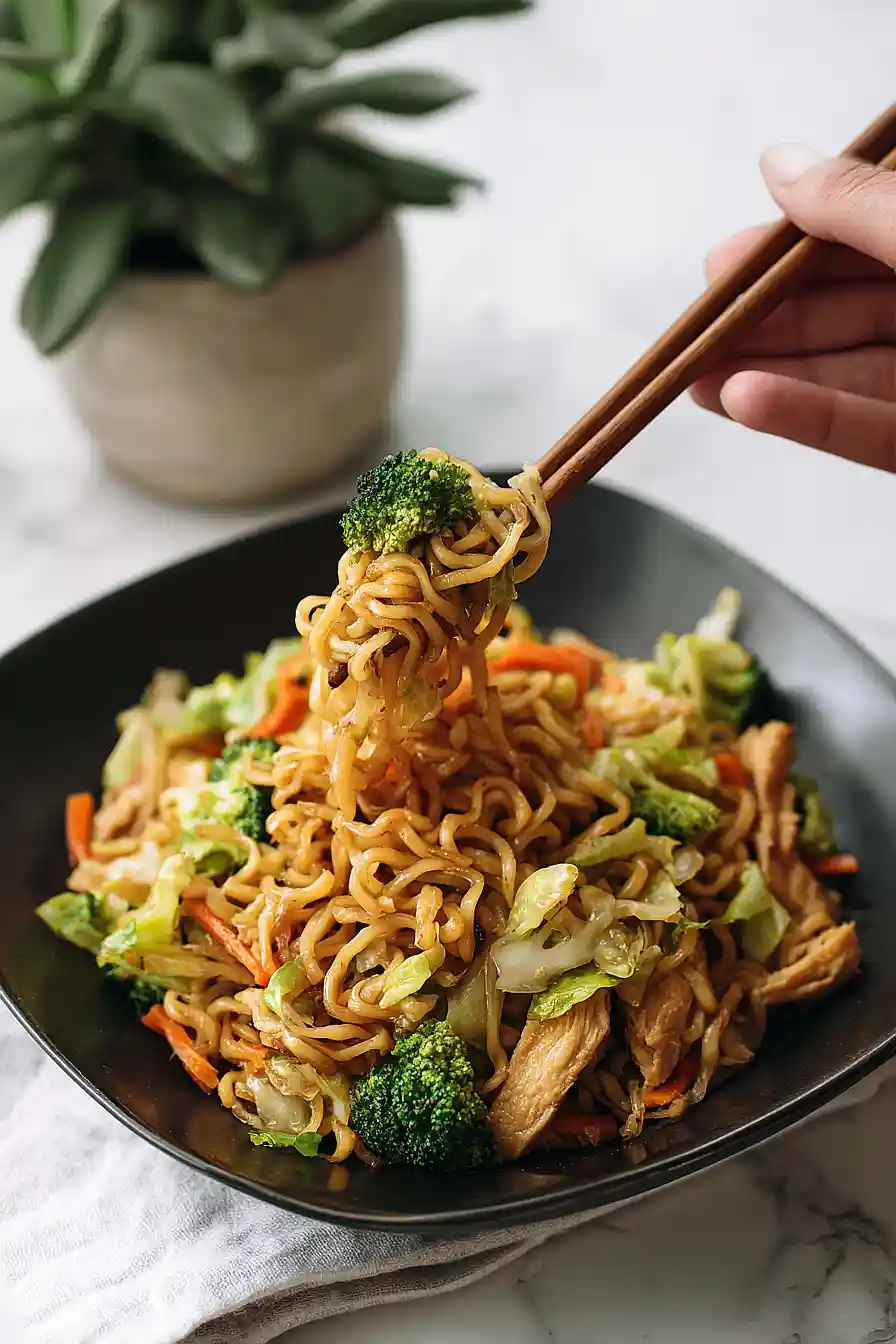
Pour the sauce from Step 4 into the skillet with the cooked vegetables and chicken. Stir everything together and let it cook for about 1 minute. Add the cooked and oiled ramen noodles from Step 5 to the skillet and toss everything together for another 2-3 minutes over medium-high heat, ensuring the noodles are evenly coated with sauce and warmed through. The noodles should be glossy and well-incorporated with all the other ingredients—this is the final moment where everything comes together into a cohesive dish.