Cut the rhubarb into 1-inch lengths and place in a small baking dish. Toss with 2.25 tablespoons of brown sugar. Roast at 350°F (180°C) for 20 minutes until the rhubarb is softened but still holds its shape. This pre-cooking removes excess moisture from the rhubarb and concentrates its tart flavor, which prevents the loaf from becoming soggy. Remove from the oven and let cool while you prepare the batter.
In a large mixing bowl, combine the softened butter (70°F is important so it creams properly) with 6.5 oz brown sugar. Beat together for 2-3 minutes until the mixture becomes light, fluffy, and pale—this incorporates air that helps the cake rise. I find that starting with butter at room temperature makes this step much faster and gives a better crumb structure.
Add the room-temperature eggs one at a time to the butter-sugar mixture from Step 2, beating well after each addition until fully incorporated. Stir in the vanilla and freshly ground ginger, then add the flour and salt. Mix until just combined—don't overmix, as this develops gluten and makes the crumb dense rather than tender. Overmixing is the most common mistake in loaf cakes, so stop as soon you don't see streaks of flour.
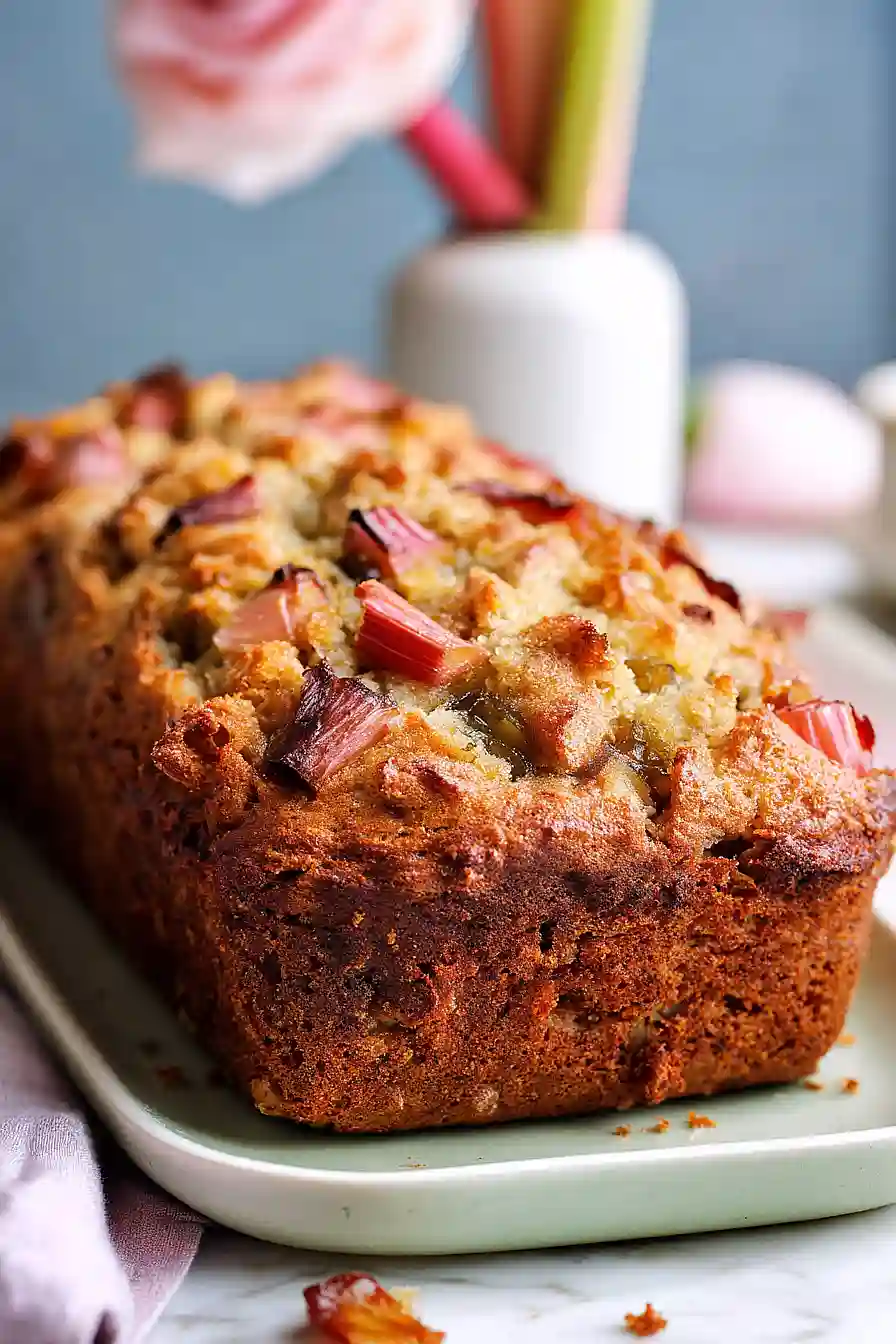
Reserve about 1/3 of the cooled rhubarb from Step 1 for topping. Fold the remaining rhubarb gently into the batter from Step 3, being careful not to crush the pieces. Transfer the batter to a parchment-lined loaf tin (approximately 8x4 inches or 9x5 inches), spreading it evenly. Arrange the reserved rhubarb pieces on top in a single layer, pressing them gently into the batter so they stay in place during baking.
Bake at 350°F (180°C) for 40 minutes uncovered, then tent the top loosely with foil to prevent the rhubarb and top from browning too quickly. Continue baking for 30-35 minutes more (1 hour 10-15 minutes total) until a toothpick inserted into the center comes out clean or with just a few moist crumbs. The foil prevents over-browning while allowing the interior to bake through completely.
Let the loaf cool in the tin for 5 minutes, then turn it out onto a wire rack to cool completely. This prevents the bottom from becoming soggy from steam condensation. Slice and serve warm or at room temperature with custard, cream, or alongside a cup of tea.