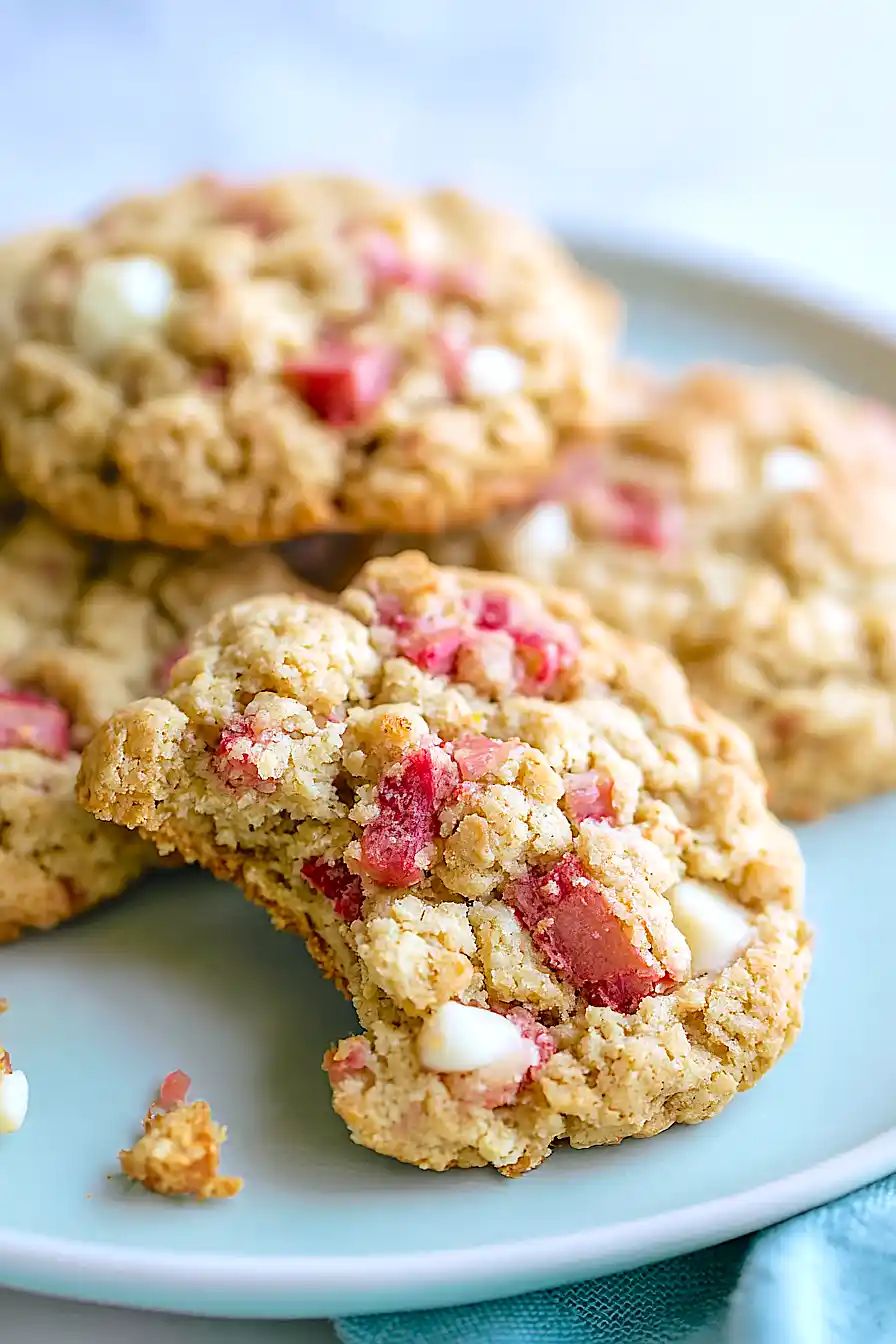
Preheat your oven to 350°F and line a baking sheet with parchment paper. Dice the rhubarb into small 1/4-inch pieces and set aside in a bowl—this prevents the pieces from breaking apart during mixing. Measure out all your dry ingredients (gluten-free flour, rolled oats, cinnamon, ginger, baking soda, and salt) and whisk them together in a separate bowl to distribute the leavening agents evenly throughout the flour, which ensures consistent rise across all your cookies.
In a large bowl, beat together the softening and packed brown sugar until the mixture is light and fluffy, about 2-3 minutes. This creaming process incorporates air into the fat, which is crucial for cookie texture and height. I always use Crisco for this recipe because it creates that perfect cookie height and texture that butter alone can't quite achieve.
Add the room temperature egg and vanilla extract to the creamed shortening and sugar mixture, and beat until well combined, about 1 minute. Using a room temperature egg helps it incorporate smoothly without seizing the fat, which would break down the air bubbles you just created and result in denser cookies.
Add the dry ingredient mixture from Step 1 to the wet mixture and stir until a soft dough just forms—don't overmix at this stage, as this can develop gluten in regular flour and make cookies tough (and it matters even with gluten-free flour since the oats have some structure). The dough should come together with a few remaining dry streaks being okay; the final mix-in will bring everything together.
Gently fold the diced rhubarb from Step 1 and the white chocolate chips into the dough using a spatula until evenly distributed. Folding rather than stirring keeps the rhubarb pieces intact and prevents them from breaking apart or bleeding too much juice into the dough, which would make the cookies soggy.
Using a tablespoon measure or small cookie scoop, drop rounded portions of dough onto the prepared baking sheet, spacing them about 2 inches apart. Gently press each scoop down to flatten it slightly—this helps with even baking and a better texture. Bake for 12-14 minutes until the edges are set but the centers still look slightly underdone; they will continue to cook on the hot pan after removal.
Let the cookies cool on the baking sheet for 10 minutes—this allows them to firm up enough to transfer without breaking, while the residual heat finishes setting the interior. Then transfer them to a cooling rack to cool completely. Serve at room temperature or slightly warm for the best texture and flavor.