If you haven't already, peel and boil the potatoes in salted water until completely tender, about 15-20 minutes depending on size. Drain well and return to the pot. Using a potato ricer or masher, work the potatoes until completely smooth with no lumps—this is crucial for a tender, cohesive bread. I find a ricer gives the best texture, but a masher works fine if you press firmly and work in stages.
While the mashed potatoes are still warm, add the butter and salt, stirring until the butter is completely melted and incorporated. The warmth helps the butter distribute evenly. Add the flour gradually, mixing gently with a wooden spoon or your hands until a soft dough forms. Don't overmix—you want a tender crumb, not a tough one. Add the black pepper at the end.
Turn the dough from Step 2 onto a lightly floured surface and knead gently for just 1-2 minutes until it comes together smoothly—overworking will make it tough. Divide the dough in half and gently roll each portion to about 1/3 inch thickness, working from the center outward. Cut each round into quarters, creating 8 wedge-shaped pieces total. I like to dust my rolling pin and surface generously with flour to prevent sticking without incorporating too much extra flour into the dough.
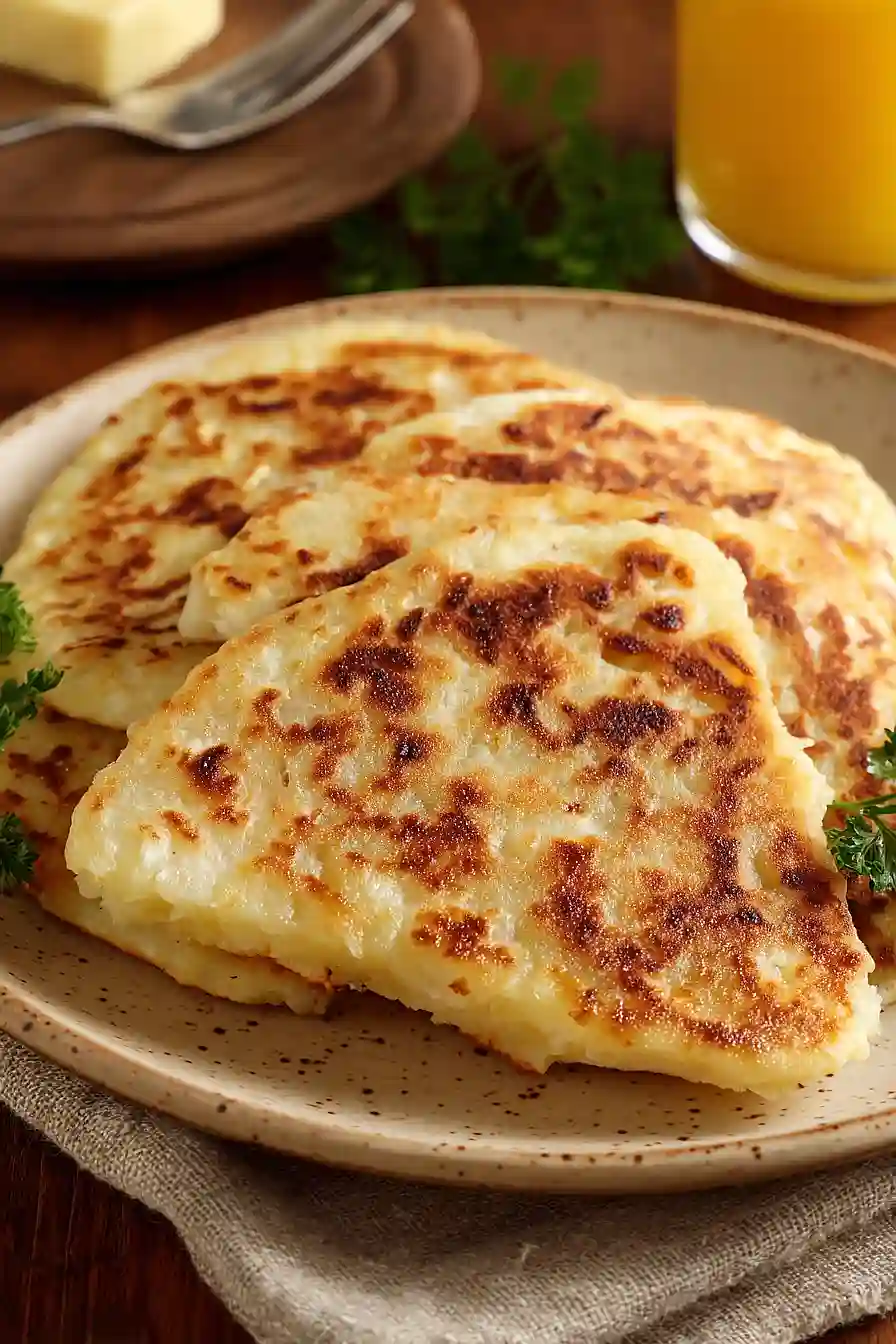
Heat a cast-iron skillet or heavy-bottomed pan over medium-high heat for about 2 minutes until it's hot but not smoking. Cook the potato bread wedges in the dry pan (no oil needed) for 3-4 minutes per side until golden brown and slightly crispy on the exterior. Work in batches if needed to avoid crowding. The starch on the surface will caramelize and create a pleasant crust while the inside stays pillowy soft.
Transfer the cooked potato bread to a warm plate. For a traditional Irish finish, you can brush with a bit of melted bacon fat or serve with a pat of butter on top. Serve immediately while warm for the best texture—the bread firms up as it cools but is always best enjoyed fresh from the pan.