I’ve always loved a good meatball. There’s something comforting about them, whether you’re serving them over pasta, tucking them into a sub, or just eating them straight from the pan. But lately, I’ve been thinking about how to make them more interesting without adding a ton of extra work.
That’s when I thought about Irish stew. You know, that hearty, warming dish with beef, root vegetables, and lots of flavor? I figured, why not pack all those same ingredients right into the meatballs themselves? You get the grated carrots and parsnips mixed right in with the meat, keeping everything moist and adding a subtle sweetness. Then I make a simple gravy to serve them in, and suddenly you’ve got all the warmth of Irish stew in an easier-to-eat form.
Want something cozy for dinner that feels a little different? These are perfect. Serve them over mashed potatoes, egg noodles, or just with some crusty bread to soak up that gravy.

Why You’ll Love These Irish Stew Meatballs
- Creative twist on tradition – These meatballs give you all the cozy flavors of Irish stew in a fun, bite-sized form that’s perfect for serving over mashed potatoes or noodles.
- Ready in about an hour – You can have this hearty dinner on the table in just over an hour, making it doable for a weeknight meal when you want something special.
- Packed with vegetables – The carrots, parsnips, and onions mixed right into the meatballs mean you’re getting your veggies without any extra side dishes.
- Rich, savory gravy – The beef broth-based gravy ties everything together and makes these meatballs extra satisfying and comforting.
What Kind of Ground Meat Should I Use?
This recipe calls for a combination of ground beef and ground pork, which gives you the best of both worlds in terms of flavor and texture. For the ground beef, I’d go with an 80/20 blend since you want some fat content to keep the meatballs juicy and flavorful. The ground pork adds extra moisture and a slightly sweet flavor that pairs really well with the beef. If you can only find one or the other at the store, you can absolutely make these with all beef or all pork – just stick with a fattier grind so your meatballs don’t end up dry. Some butcher counters will even mix the two meats for you if you ask, which can save you a step at home.
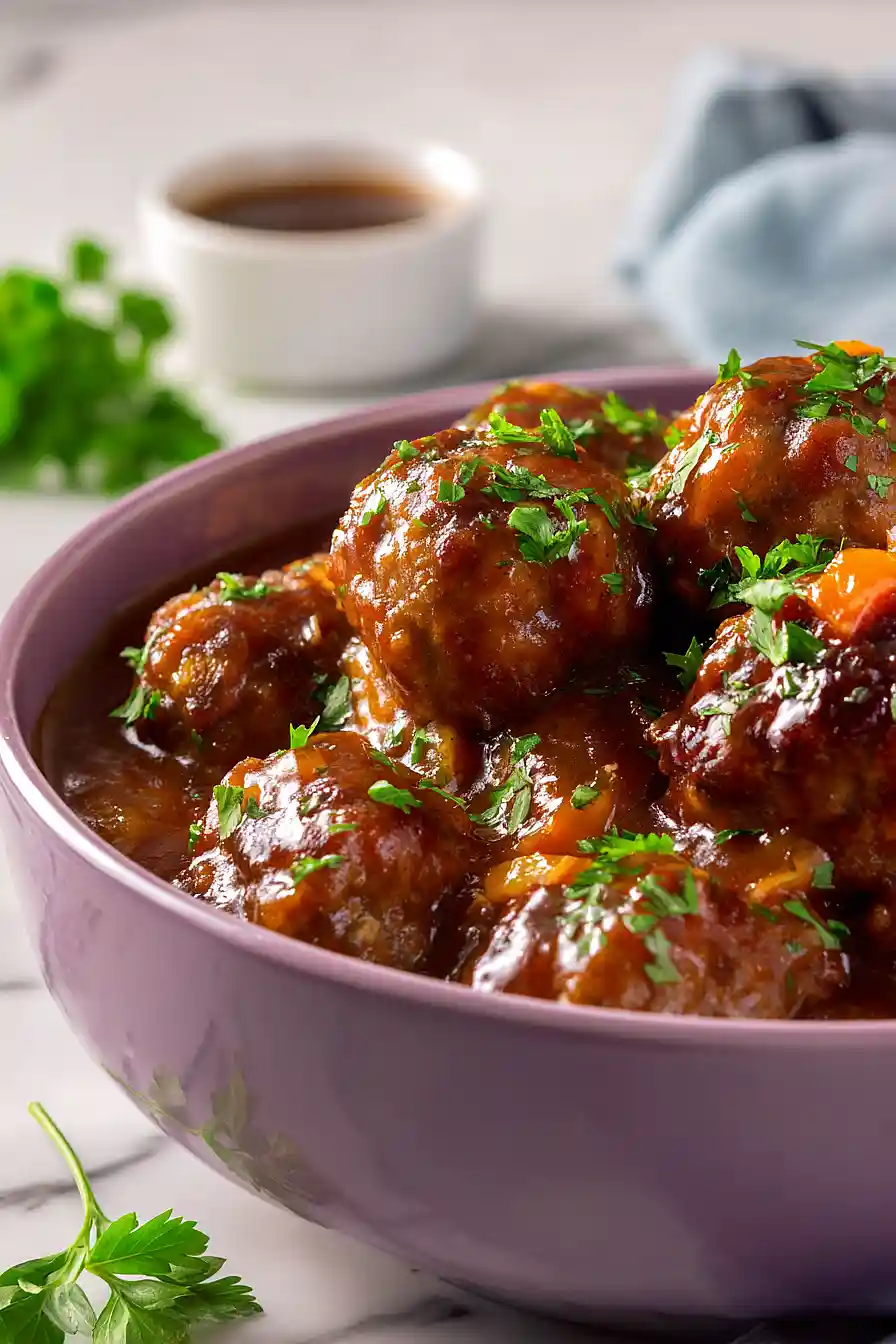
Options for Substitutions
This recipe is pretty forgiving when it comes to swaps, so here are some options if you need them:
- Ground pork: If you don’t have ground pork, you can use all ground beef instead. You could also try ground lamb for a more traditional Irish flavor, though it will give the meatballs a stronger taste.
- Parsnip: Parsnips can be hard to find sometimes. Just use an extra carrot or swap in a turnip for a similar earthy sweetness.
- Crackers: Breadcrumbs work just as well here – use the same amount. Panko will make the meatballs a bit lighter, while regular breadcrumbs keep them denser.
- Potato starch: Cornstarch is a perfect substitute for the potato starch in both the meatballs and the gravy. Use the same measurements. You can also use all-purpose flour, but you’ll need about 3 tablespoons for thickening the gravy instead of 2.
- Beef broth: Chicken broth will work in a pinch, though you’ll lose some of that rich, meaty flavor. Consider adding a splash of Worcestershire sauce to boost the savory notes.
- Eggs: For binding the meatballs, you can use 1/4 cup of milk mixed with 2 tablespoons of ground flaxseed as an egg replacement.
Watch Out for These Mistakes While Cooking
The biggest mistake when making meatballs is not letting your cooked vegetables cool completely before mixing them with the meat – adding hot vegetables can start cooking the eggs and make your mixture difficult to work with.
Another common error is overcrowding the pan when browning the meatballs, which causes them to steam instead of getting that nice golden crust, so work in batches and give each meatball some space.
Don’t skip the browning step thinking you can save time – those caramelized bits add serious flavor to your gravy, and the sear helps the meatballs hold their shape during the final simmer.
When whisking the potato starch into the broth, make sure to dissolve it in a little cold liquid first to avoid lumps, and if your gravy seems too thick, you can always thin it out with a splash more broth.
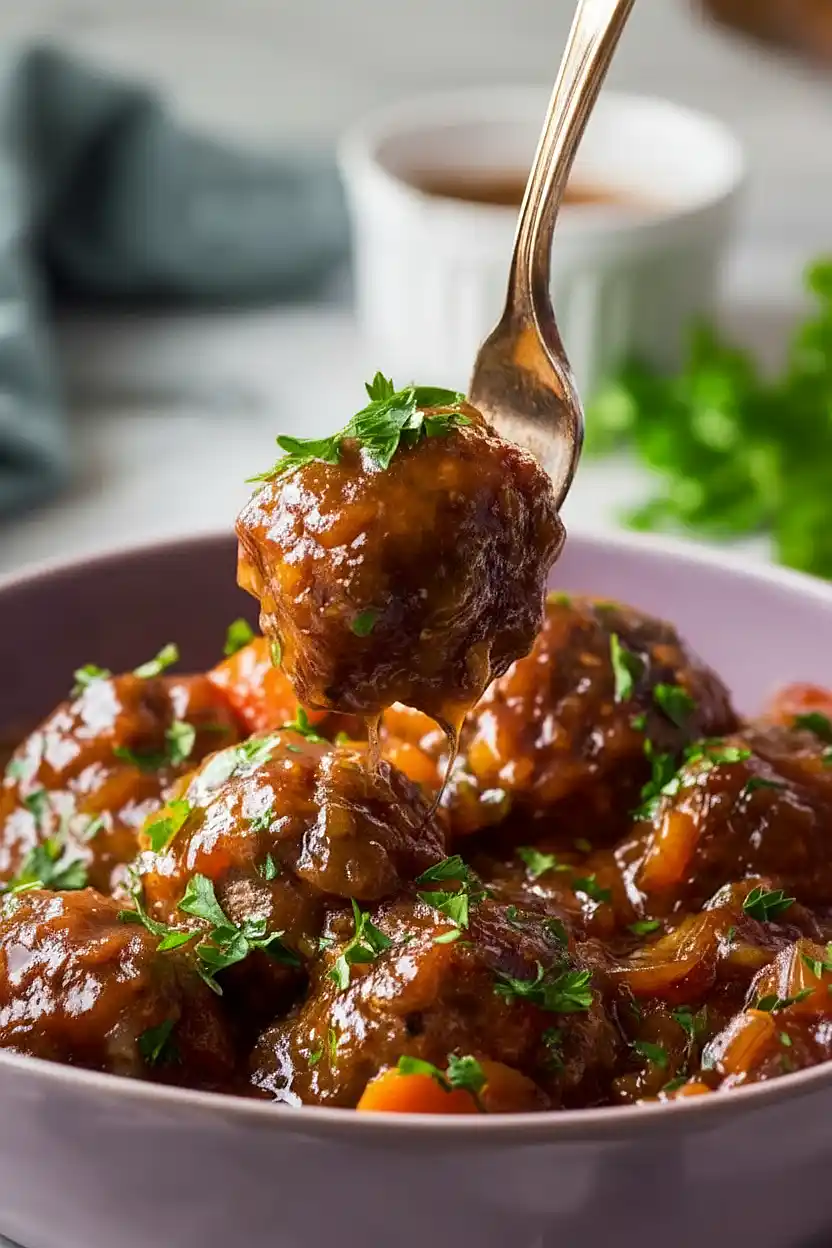
What to Serve With Irish Stew Meatballs?
These hearty meatballs are begging for something to soak up all that delicious gravy, so I always serve them over creamy mashed potatoes or buttered egg noodles. A side of roasted root vegetables like carrots, turnips, or more parsnips keeps with the Irish stew theme and adds some nice color to your plate. If you want to keep things simple, a slice of crusty bread or some Irish soda bread is perfect for mopping up the sauce. For a lighter option, try serving these meatballs alongside some steamed green beans or cabbage to balance out the richness of the dish.
Storage Instructions
Store: These meatballs keep really well in the fridge for up to 4 days. Just store them in an airtight container with the gravy, and they’ll actually taste even better the next day as the flavors meld together. Perfect for easy weeknight dinners when you don’t feel like cooking from scratch.
Freeze: You can freeze these meatballs for up to 3 months, either with or without the gravy. I like to freeze them in portion-sized containers so I can grab just what I need. If you freeze them with the gravy, they’ll be ready to reheat and serve in no time.
Reheat: Warm them up gently on the stovetop over medium-low heat, stirring occasionally until heated through. You can also microwave individual portions, but I find the stovetop keeps the meatballs from drying out. Add a splash of beef broth if the gravy seems too thick after storing.
| Preparation Time | 40-50 minutes |
| Cooking Time | 15-20 minutes |
| Total Time | 60-70 minutes |
| Level of Difficulty | Medium |
| Servings | 8 servings |
Estimated Nutrition
Estimated nutrition for the whole recipe (without optional ingredients):
- Calories: 3100-3400
- Protein: 180-200 g
- Fat: 200-220 g
- Carbohydrates: 130-150 g
Ingredients
For the meatballs:
- 1 large carrot (grated into thin shreds)
- 1 large parsnip (peeled and finely grated)
- 1 medium onion
- 3 garlic cloves
- 2.25 lb ground beef (80/20 Chuck)
- 1 lb ground pork
- 1/3 cup parsley
- 2 large eggs
- 3/4 cup crackers (crushed into fine crumbs)
- 1/4 cup potato starch
- 1.5 tsp pepper
- 1.25 tsp salt
- 1 tsp Worcestershire sauce
- vegetable oil
For the gravy:
- 2.5 cups beef broth
- 2.5 tbsp potato starch (whisked with water to prevent lumps)
- 1/4 cup fresh parsley
- salt to taste
- pepper to taste
Step 1: Prepare Mise en Place and Cook the Vegetable Base
- 1 large carrot, grated
- 1 large parsnip, peeled and finely grated
- 1 medium onion, diced
- 3 garlic cloves, minced
- vegetable oil
Grate the carrot and parsnip into thin shreds, then finely dice the onion and mince the garlic cloves.
Heat a large skillet over medium heat with a touch of vegetable oil.
Add the grated carrot, parsnip, and diced onion, cooking for about 5-7 minutes until the vegetables soften and release their moisture.
Add the minced garlic and continue cooking for another 2-3 minutes until the mixture becomes dry (this concentrates the flavors).
Transfer the cooked vegetables to a bowl and let them cool slightly before proceeding—this prevents the eggs from cooking when mixed in.
Step 2: Mix and Shape the Meatballs
- cooled vegetable mixture from Step 1
- 2.25 lb ground beef
- 1 lb ground pork
- 1/3 cup fresh parsley, chopped
- 2 large eggs
- 3/4 cup crackers, crushed into fine crumbs
- 1/4 cup potato starch
- 1.5 tsp pepper
- 1.25 tsp salt
- 1 tsp Worcestershire sauce
To the cooled vegetable mixture from Step 1, add the ground beef, ground pork, fresh parsley, eggs, crushed crackers, potato starch, salt, and pepper.
Mix gently with your hands until just combined—overmixing will make the meatballs dense and tough.
Divide the mixture into roughly 1½-inch balls and place them on a plate.
I find it helpful to wet my hands slightly with water while shaping; it prevents sticking and gives you cleaner meatballs.
Step 3: Brown the Meatballs
- shaped meatballs from Step 2
- vegetable oil
Heat 2-3 tablespoons of vegetable oil in a large skillet over medium-high heat.
Working in batches if needed to avoid overcrowding, add the shaped meatballs and brown them on all sides for about 8-10 minutes total, turning occasionally for even color.
You’re not cooking them through at this stage—just developing a golden crust for flavor.
Transfer the browned meatballs to a clean plate.
Step 4: Build the Irish Stew Gravy
- 2.5 cups beef broth
- 2.5 tbsp potato starch, whisked with water
- 1/4 cup fresh parsley, chopped
- salt to taste
- pepper to taste
In the same skillet (don’t clean it—the browned bits add flavor), whisk together the beef broth and the potato starch that has been mixed with water.
Bring this mixture to a gentle simmer over medium heat, stirring occasionally for about 5-7 minutes until it thickens slightly and becomes glossy.
Stir in the fresh parsley and season with salt and pepper to taste.
The gravy should coat the back of a spoon lightly—this creates that classic Irish stew consistency.
Step 5: Simmer Meatballs in Gravy and Finish
- browned meatballs from Step 3
- Irish stew gravy from Step 4
Return the browned meatballs from Step 3 to the skillet with the gravy from Step 4.
Reduce heat to medium-low and gently simmer for 10-15 minutes, stirring occasionally to coat the meatballs evenly.
I like to let them simmer uncovered so the gravy reduces slightly and the flavors meld together beautifully.
The meatballs are ready when they’re cooked through and the gravy has the silky texture of a proper Irish stew.
Serve warm directly from the skillet, or transfer to a slow cooker on the warm setting if making ahead.
Tender Irish Stew Meatballs
Ingredients
Method
- Grate the carrot and parsnip into thin shreds, then finely dice the onion and mince the garlic cloves. Heat a large skillet over medium heat with a touch of vegetable oil. Add the grated carrot, parsnip, and diced onion, cooking for about 5-7 minutes until the vegetables soften and release their moisture. Add the minced garlic and continue cooking for another 2-3 minutes until the mixture becomes dry (this concentrates the flavors). Transfer the cooked vegetables to a bowl and let them cool slightly before proceeding—this prevents the eggs from cooking when mixed in.
- To the cooled vegetable mixture from Step 1, add the ground beef, ground pork, fresh parsley, eggs, crushed crackers, potato starch, salt, and pepper. Mix gently with your hands until just combined—overmixing will make the meatballs dense and tough. Divide the mixture into roughly 1½-inch balls and place them on a plate. I find it helpful to wet my hands slightly with water while shaping; it prevents sticking and gives you cleaner meatballs.
- Heat 2-3 tablespoons of vegetable oil in a large skillet over medium-high heat. Working in batches if needed to avoid overcrowding, add the shaped meatballs and brown them on all sides for about 8-10 minutes total, turning occasionally for even color. You're not cooking them through at this stage—just developing a golden crust for flavor. Transfer the browned meatballs to a clean plate.
- In the same skillet (don't clean it—the browned bits add flavor), whisk together the beef broth and the potato starch that has been mixed with water. Bring this mixture to a gentle simmer over medium heat, stirring occasionally for about 5-7 minutes until it thickens slightly and becomes glossy. Stir in the fresh parsley and season with salt and pepper to taste. The gravy should coat the back of a spoon lightly—this creates that classic Irish stew consistency.
- Return the browned meatballs from Step 3 to the skillet with the gravy from Step 4. Reduce heat to medium-low and gently simmer for 10-15 minutes, stirring occasionally to coat the meatballs evenly. I like to let them simmer uncovered so the gravy reduces slightly and the flavors meld together beautifully. The meatballs are ready when they're cooked through and the gravy has the silky texture of a proper Irish stew. Serve warm directly from the skillet, or transfer to a slow cooker on the warm setting if making ahead.