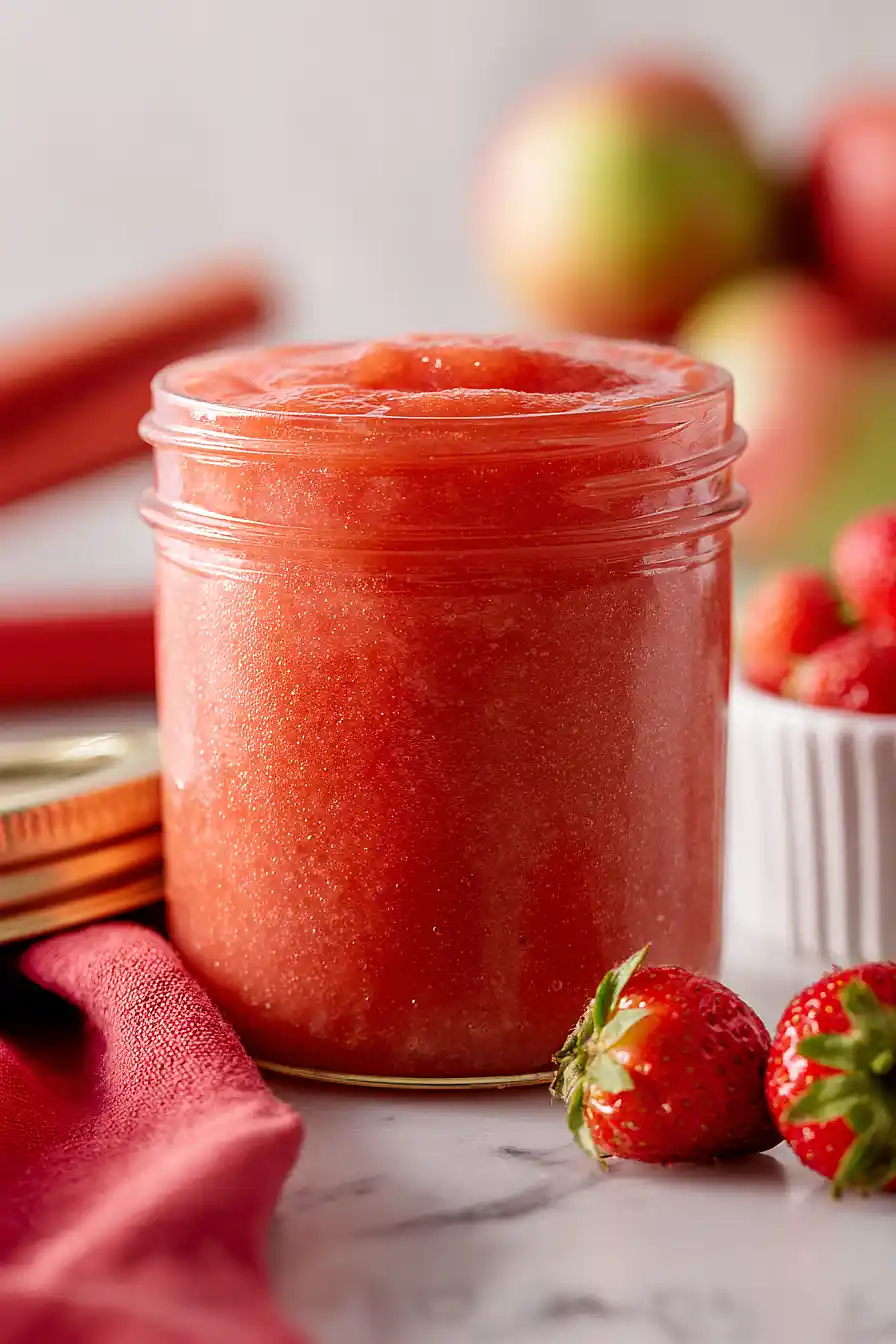
Here is my favorite strawberry rhubarb applesauce recipe, with a mix of sweet strawberries, tart rhubarb, and apples, all simmered together with honey, cinnamon, and a splash of lemon juice.
This applesauce is perfect for spring when strawberries and rhubarb are in season. I love making a big batch to keep in the fridge for snacking, or serving it warm over vanilla ice cream for a simple dessert.
Why You’ll Love This Strawberry Rhubarb Applesauce
- Naturally sweetened – Using honey instead of refined sugar makes this a healthier option that still tastes amazing, and you can adjust the sweetness to your liking.
- Quick and easy – Ready in under an hour with minimal hands-on time, this recipe is perfect for busy weeknights or weekend meal prep.
- Unique flavor combination – The classic applesauce gets a fun twist with strawberries and rhubarb, creating a sweet-tart flavor that’s way more interesting than store-bought versions.
- Simple ingredients – Just a handful of wholesome ingredients you can easily find at your local grocery store or farmer’s market.
- Versatile use – Enjoy it as a snack, breakfast topping, side dish, or even as a healthier dessert option for the whole family.
What Kind of Apples Should I Use?
The type of apples you choose will affect both the sweetness and texture of your applesauce. Softer apples like McIntosh or Cortland break down quickly and create a smoother sauce, while firmer varieties like Honeycrisp or Granny Smith hold their shape a bit longer and add a nice tartness that pairs well with the strawberries and rhubarb. I like to use a mix of sweet and tart apples to get a good balance of flavors – maybe two cups of Gala for sweetness and one cup of Granny Smith for tang. Whatever you choose, just make sure to core them well, but there’s no need to peel them since they’ll break down as they cook and add extra fiber to your sauce.

Options for Substitutions
This recipe is pretty forgiving when it comes to swaps, so here are some options:
- Strawberries: Fresh or frozen strawberries both work great here. If using frozen, no need to thaw them first – just toss them in as is.
- Rhubarb: Rhubarb is really the star of this recipe, so I’d recommend keeping it. If you absolutely can’t find it, you could increase the strawberries and add a squeeze of lemon juice for tartness, but the flavor will be different.
- Apples: Any variety works, but sweeter apples like Fuji or Gala will give you a milder sauce, while tart apples like Granny Smith will add more zing. You can also use pears for a softer, sweeter result.
- Honey: Feel free to swap honey with maple syrup, agave nectar, or regular white sugar. Start with less than the recipe calls for and taste as you go, since sweetness is really a personal preference.
Watch Out for These Mistakes While Cooking
The biggest mistake when making this applesauce is adding the honey too early, which can cause it to break down and lose its natural sweetness – always stir it in after you’ve removed the pot from the heat.
Another common error is not cutting your apples and rhubarb into similar-sized pieces, which leads to uneven cooking where some chunks are mushy while others are still firm.
Keep a close eye on the liquid level during simmering, as letting too much water evaporate can result in a thick, paste-like texture instead of smooth applesauce – add a splash more water if needed.
Finally, taste your fruit before adding the full amount of honey, since strawberries and apples vary in sweetness depending on the season, and you might need less than the recipe calls for.
What to Serve With Strawberry Rhubarb Applesauce?
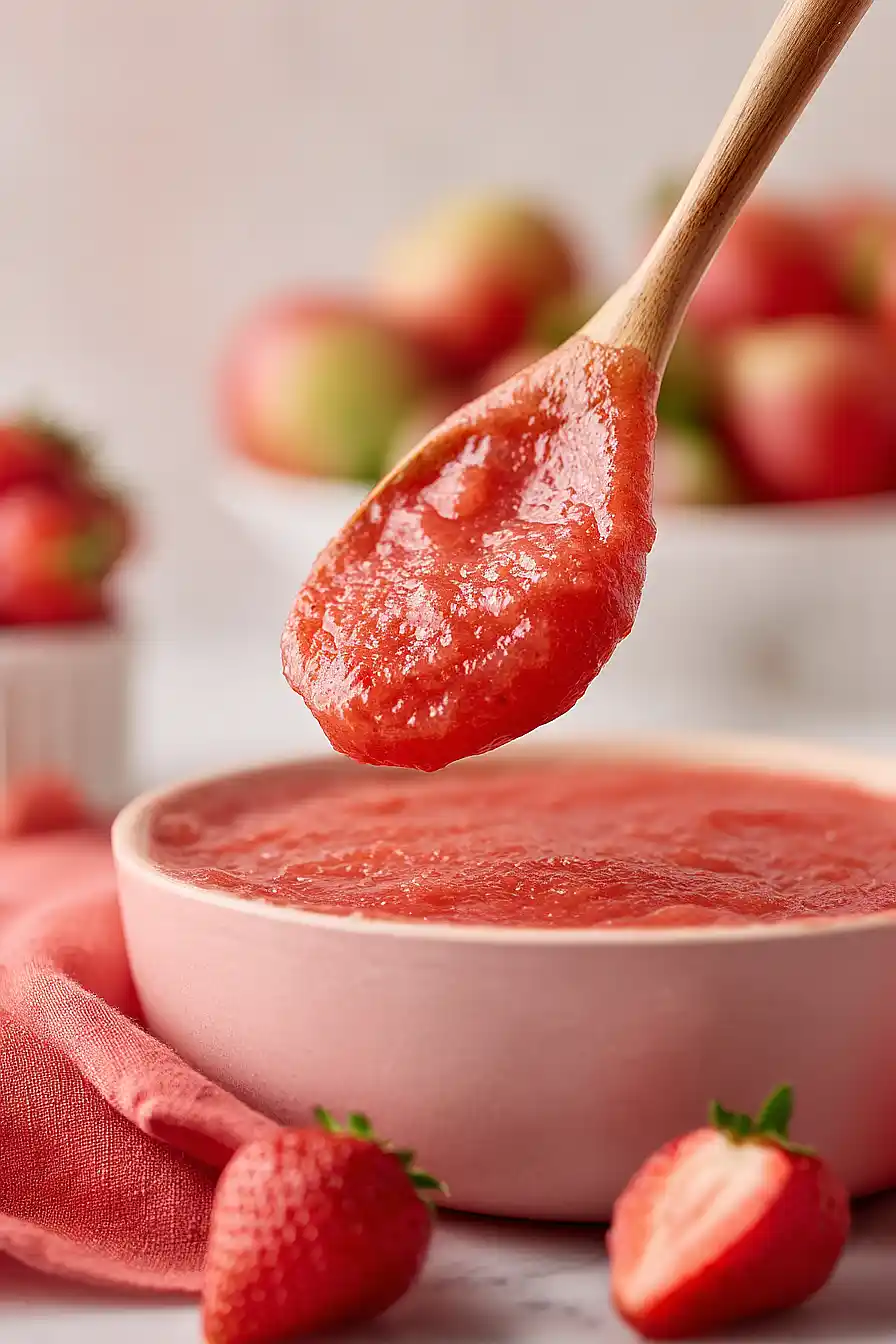
This fruity applesauce is perfect for breakfast spooned over warm oatmeal, yogurt bowls, or pancakes. I love serving it alongside pork chops or roasted chicken for dinner since the sweet-tart flavor cuts through richer meats really nicely. It also makes a great snack on its own, or you can use it as a topping for vanilla ice cream or pound cake when you want something a little sweet. For a fun brunch idea, try dolloping it on top of French toast or waffles with a sprinkle of granola for some crunch.
Storage Instructions
Refrigerate: Once your applesauce has cooled down, transfer it to an airtight container or mason jar and keep it in the fridge. It’ll stay fresh for about a week, making it perfect for quick snacks or breakfast toppings throughout the week.
Freeze: This applesauce freezes really well for longer storage. Portion it into freezer-safe containers or even ice cube trays if you want smaller servings, and it’ll keep for up to 3 months. Just leave a little room at the top of the container since it expands when frozen.
Thaw: When you’re ready to use your frozen applesauce, just move it to the fridge the night before and let it thaw slowly. You can also thaw it at room temperature for a few hours. Give it a good stir once it’s thawed, and it’s ready to enjoy cold or at room temp.
| Preparation Time | 10-15 minutes |
| Cooking Time | 30-40 minutes |
| Total Time | 40-55 minutes |
| Level of Difficulty | Easy |
| Servings | 7 cups of applesauce |
Estimated Nutrition
Estimated nutrition for the whole recipe (without optional ingredients):
- Calories: 450-510
- Protein: 2-3 g
- Fat: 0-1 g
- Carbohydrates: 120-135 g
Ingredients
- 3/4 cup water
- 2 cups strawberries (hulled and halved for even cooking)
- 16 oz rhubarb (sliced into 1/2-inch thick pieces)
- 3 1/2 cups apples (peeled and cut into 1-inch chunks)
- 1/2 cup honey (I prefer Nature Nate’s raw honey)
- 1/8 teaspoon salt
- 1 tablespoon lemon juice
- 1/4 teaspoon ground cinnamon
Step 1: Prepare and Combine Fruit
- 3 1/2 cups apples
- 16 oz rhubarb
- 2 cups strawberries
- 3/4 cup water
- 1/8 teaspoon salt
Peel and cut apples into 1-inch chunks, slice rhubarb into 1/2-inch thick pieces, and hull and halve strawberries.
Add all prepared fruit to a large pot along with the water and salt.
This prep work ensures even cooking and helps the fruit break down uniformly during simmering.
Step 2: Simmer Fruit Until Tender
- fruit mixture from Step 1
Bring the fruit mixture to a boil over medium heat, then reduce heat and simmer for about 30 minutes, stirring occasionally, until all fruit is completely soft and breaking apart easily.
The apples and rhubarb take longer to soften than strawberries, so simmering together ensures everything cooks evenly.
I like to give it a stir every 10 minutes or so to prevent sticking on the bottom.
Step 3: Blend to Desired Consistency
- cooked fruit mixture from Step 2
Remove the pot from heat and let cool for 2-3 minutes.
Using an immersion blender, blend the cooked fruit until smooth, working in batches if using a traditional blender.
For a chunkier applesauce, blend less; for silky-smooth texture, blend longer.
I prefer mine completely smooth, so I blend for a full 2-3 minutes until no pulp remains.
Step 4: Reduce and Concentrate Flavors
- blended fruit mixture from Step 3
Return the blended sauce to the stove over medium heat and simmer uncovered for 8-12 minutes, stirring frequently, until it thickens to your preferred consistency.
The sauce will reduce slightly and become more concentrated in flavor.
You’ll know it’s ready when it coats the back of a spoon and doesn’t run off immediately.
Step 5: Finish with Honey and Aromatics
- reduced applesauce from Step 4
- 1/2 cup honey
- 1 tablespoon lemon juice
- 1/4 teaspoon ground cinnamon
Remove from heat and immediately stir in the honey, lemon juice, and ground cinnamon until fully incorporated.
The residual heat will gently warm these final ingredients without cooking off the delicate flavors.
Taste and adjust sweetness or tartness as needed before serving warm or at room temperature.
Tasty Strawberry Rhubarb Applesauce
Ingredients
Method
- Peel and cut apples into 1-inch chunks, slice rhubarb into 1/2-inch thick pieces, and hull and halve strawberries. Add all prepared fruit to a large pot along with the water and salt. This prep work ensures even cooking and helps the fruit break down uniformly during simmering.
- Bring the fruit mixture to a boil over medium heat, then reduce heat and simmer for about 30 minutes, stirring occasionally, until all fruit is completely soft and breaking apart easily. The apples and rhubarb take longer to soften than strawberries, so simmering together ensures everything cooks evenly. I like to give it a stir every 10 minutes or so to prevent sticking on the bottom.
- Remove the pot from heat and let cool for 2-3 minutes. Using an immersion blender, blend the cooked fruit until smooth, working in batches if using a traditional blender. For a chunkier applesauce, blend less; for silky-smooth texture, blend longer. I prefer mine completely smooth, so I blend for a full 2-3 minutes until no pulp remains.
- Return the blended sauce to the stove over medium heat and simmer uncovered for 8-12 minutes, stirring frequently, until it thickens to your preferred consistency. The sauce will reduce slightly and become more concentrated in flavor. You'll know it's ready when it coats the back of a spoon and doesn't run off immediately.
- Remove from heat and immediately stir in the honey, lemon juice, and ground cinnamon until fully incorporated. The residual heat will gently warm these final ingredients without cooking off the delicate flavors. Taste and adjust sweetness or tartness as needed before serving warm or at room temperature.