Snacks in my house disappear faster than I can restock them. Between work, errands, and getting the kids to their activities, I’m always looking for protein-packed options that don’t cost a fortune at the store. That’s when I started making my own jerky at home.
Chicken jerky has become my go-to because it’s cheaper than beef and my whole family loves it. The teriyaki flavor is a winner every time. I add pineapple juice to the marinade for a little sweetness and tang that really makes a difference. Plus, you can make a big batch on the weekend and have snacks ready for the whole week.
Want something savory for lunches? This is it. Craving a high-protein snack after the gym? Same. Honestly, I keep a bag in my purse at all times because it beats hitting the drive-through when hunger strikes.
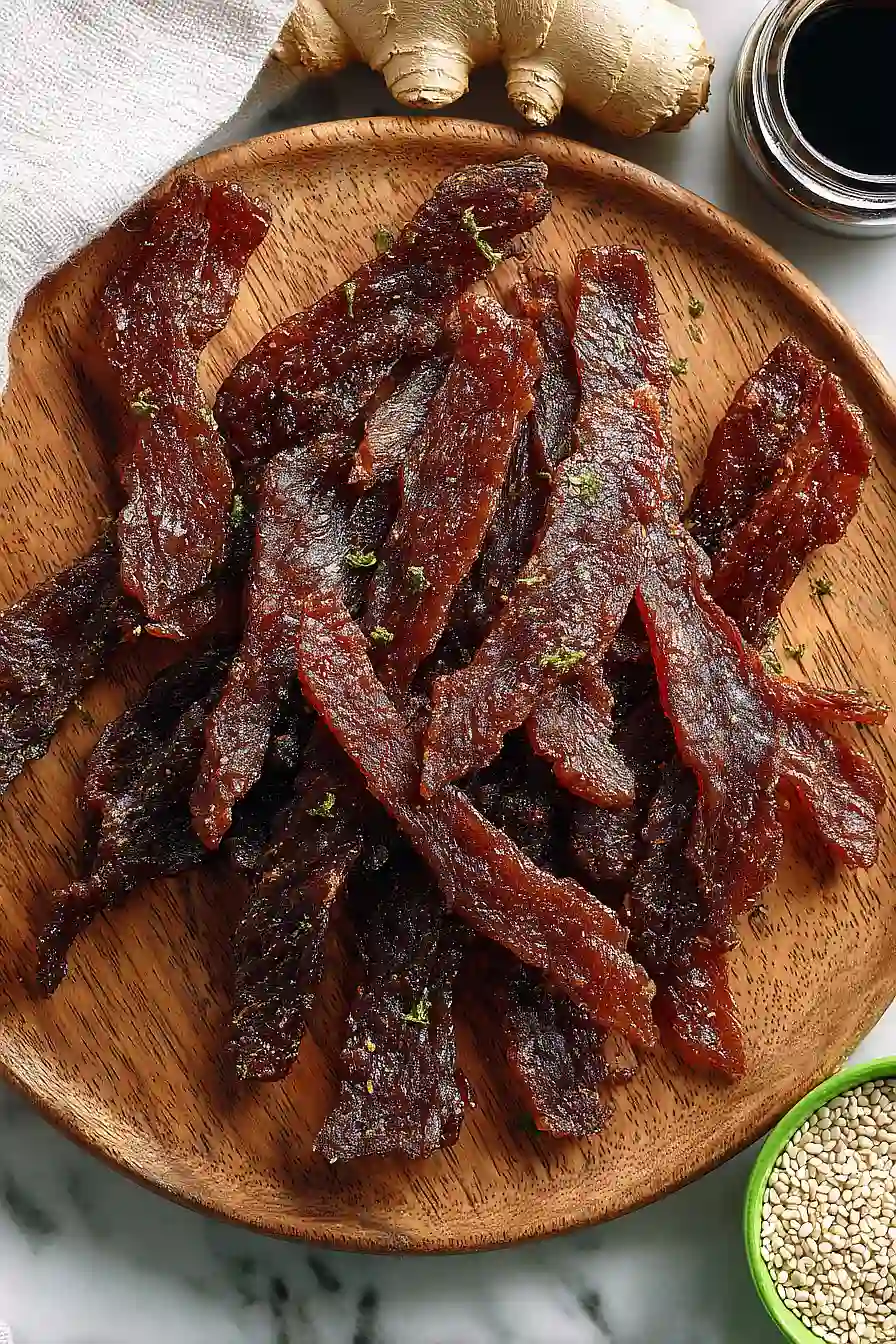
Why You’ll Love This Teriyaki Chicken Jerky
- High-protein snack – This homemade jerky is packed with lean protein from chicken breast, making it perfect for post-workout fuel or keeping you satisfied between meals.
- Simple ingredients – You only need five ingredients to make this jerky, and they’re all easy to find at your local grocery store.
- Budget-friendly – Making your own jerky at home costs way less than buying those expensive bags at the store, and you get way more for your money.
- Customizable heat level – You can easily adjust the crushed red pepper to make it as mild or spicy as you like, so everyone in the family can enjoy it.
- Perfect for meal prep – This jerky keeps well and is great for packing in lunches, taking on road trips, or stashing in your desk drawer for a quick snack.
What Kind of Chicken Should I Use?
For making jerky, you’ll want to use boneless, skinless chicken breasts since they’re lean and easy to slice uniformly. Try to pick chicken breasts that are similar in size and thickness so they’ll dry evenly in your dehydrator or oven. If you can only find really thick chicken breasts at the store, don’t worry – you can always butterfly or pound them to a more even thickness before slicing. Fresh chicken works great, but if you’re using frozen, make sure to thaw it completely in the fridge first, as partially frozen chicken will be harder to slice into those thin, even strips you need for jerky.
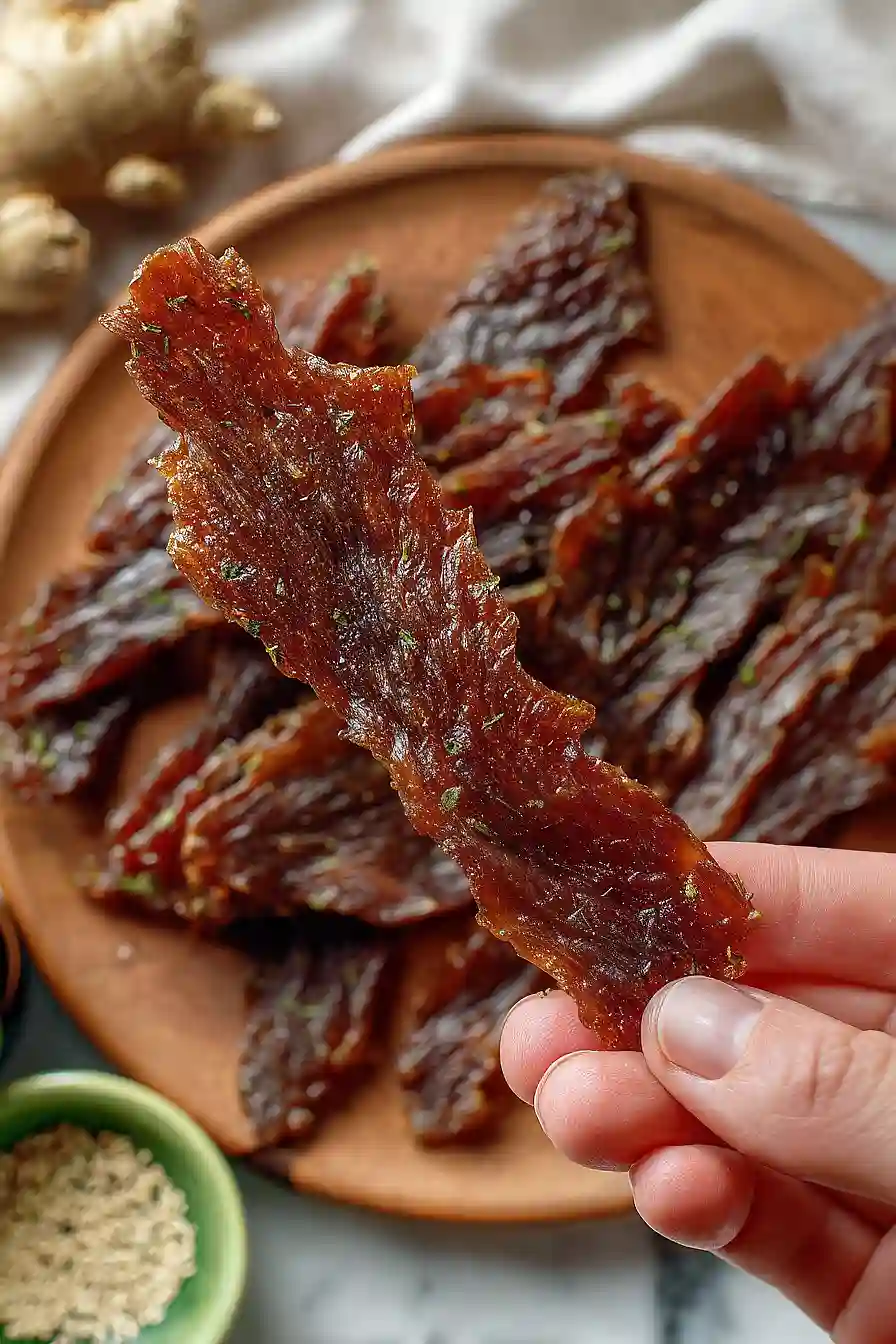
Options for Substitutions
This jerky recipe is pretty straightforward, but here are some swaps you can make if needed:
- Chicken breasts: You can use chicken thighs instead of breasts for a slightly fattier, more flavorful jerky. Just trim off any excess fat before slicing, as too much fat can make the jerky spoil faster.
- Teriyaki sauce: Soy sauce mixed with a tablespoon of brown sugar and a bit of ginger makes a decent substitute. You can also try coconut aminos for a gluten-free option, though the flavor will be a bit milder.
- Pineapple juice: Orange juice or apple juice work well as alternatives. Both add sweetness and help tenderize the meat, though pineapple juice does this best due to its natural enzymes.
- Liquid smoke: If you don’t have liquid smoke, you can skip it entirely – your jerky just won’t have that smoky flavor. Alternatively, add ½ teaspoon of smoked paprika to the marinade.
- Crushed red pepper: Adjust the heat to your liking by using more or less, or swap it with cayenne pepper (use about ¼ teaspoon as it’s stronger) or leave it out completely for a milder jerky.
Watch Out for These Mistakes While Cooking
The biggest mistake when making chicken jerky is slicing the meat unevenly, which causes some pieces to dry out completely while others remain undercooked – aim for consistent 1/4 inch strips by partially freezing the chicken first, making it much easier to cut uniform pieces.
Another common error is overcrowding the dehydrator trays, as overlapping strips won’t dry properly and can create spots where bacteria might grow, so make sure each piece has space around it for air circulation.
Don’t skip the step of trimming all visible fat from the chicken before slicing, since fat doesn’t dehydrate well and can turn rancid during storage, shortening your jerky’s shelf life.
Finally, test for doneness by bending a piece – properly dried jerky should crack slightly but not snap in half, and if you’re unsure, it’s always better to dehydrate a bit longer than to end up with chewy, undercooked jerky.
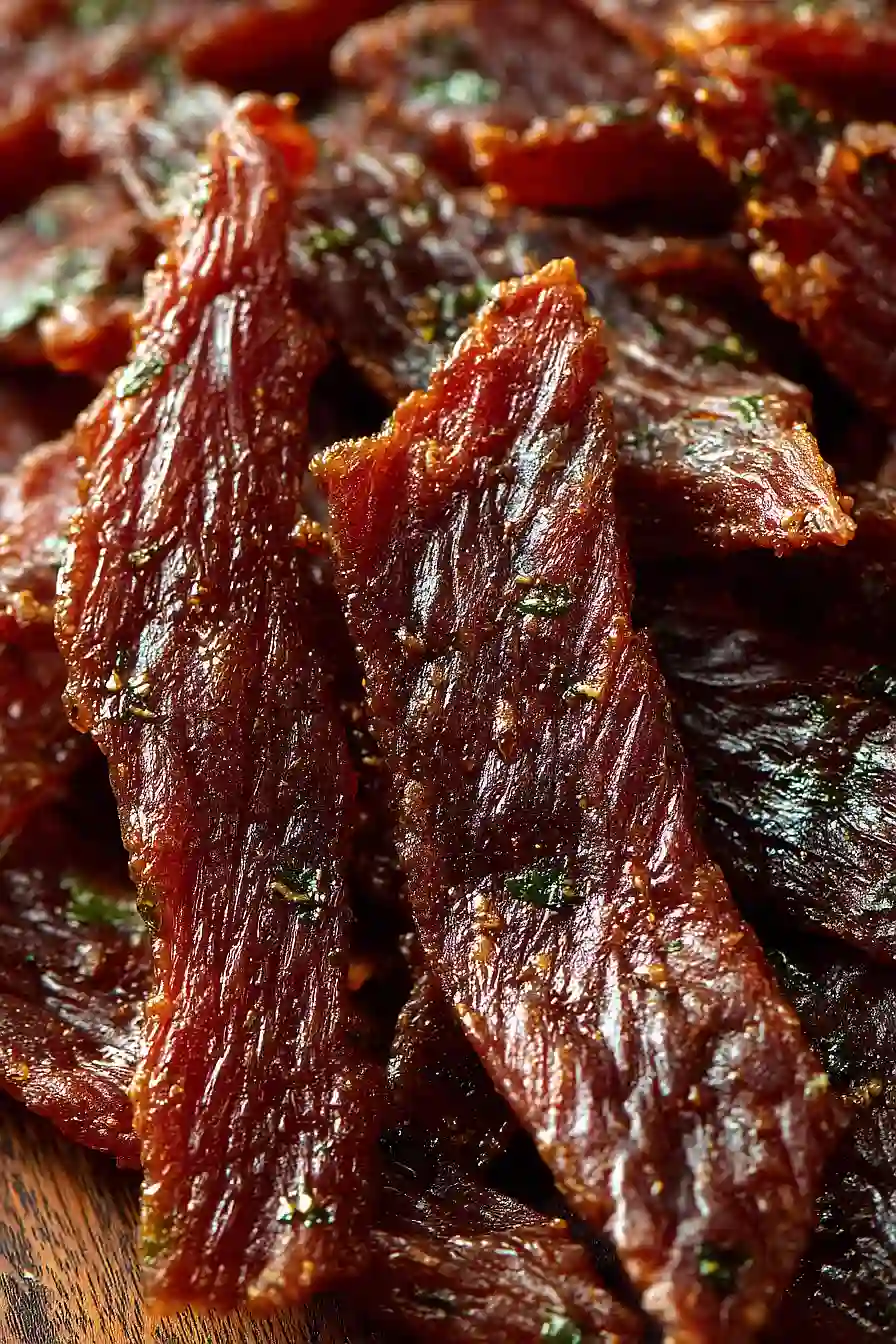
What to Serve With Teriyaki Chicken Jerky?
Teriyaki chicken jerky is perfect as a standalone snack for road trips, hiking, or just keeping in your desk drawer when hunger strikes. I like pairing it with fresh pineapple chunks or apple slices to balance out the salty-sweet flavors, and it goes great with mixed nuts like cashews or almonds for a protein-packed snack mix. If you’re putting together a snack board, add some cheese cubes, crackers, and maybe some edamame for a fun spread that everyone can pick at. You can also chop up the jerky and toss it into fried rice or ramen for an easy flavor boost.
Storage Instructions
Store: Once your jerky is completely cooled and dried, store it in an airtight container or resealable bag at room temperature for up to 2 weeks. If you notice any moisture forming inside the container, just pat the jerky dry with a paper towel to keep it from getting soft.
Refrigerate: For longer storage, keep your teriyaki chicken jerky in the fridge where it’ll stay good for about a month. The cool temperature helps maintain that perfect chewy texture and keeps everything fresh.
Freeze: You can freeze this jerky for up to 6 months in a freezer-safe bag or container. Just thaw it in the fridge overnight when you’re ready to snack, and it’ll taste just as good as the day you made it.
| Preparation Time | 10-15 minutes |
| Cooking Time | 20-20 hours |
| Total Time | 21-22 hours |
| Level of Difficulty | Medium |
| Servings | 16 servings |
Estimated Nutrition
Estimated nutrition for the whole recipe (without optional ingredients):
- Calories: 900-1050
- Protein: 165-185 g
- Fat: 10-14 g
- Carbohydrates: 30-40 g
Ingredients
For the chicken:
- 3 lb boneless skinless chicken breast (sliced into 1/4-inch strips across the grain)
For the marinade:
- 1/2 cup teriyaki sauce (I highly recommend Kikkoman brand)
- 1 cup pineapple juice (for improved acidity and sweetness)
- 1.5 tbsp liquid smoke
- 1 tsp chili flakes
- 1 tbsp honey
- 1/2 tsp ground ginger
Step 1: Prepare and Slice the Chicken
- 3 lb boneless skinless chicken breast
Start by removing any visible fat from the chicken breasts with a sharp knife, as fat can go rancid during the long dehydration process.
Place the trimmed chicken in the freezer for 1 hour—this firms up the meat and makes slicing much easier and cleaner.
Once partially frozen, slice the chicken across the grain into 1/4-inch strips, which ensures the jerky will be tender to bite through rather than tough and stringy.
Step 2: Build the Teriyaki Marinade
- 1/2 cup teriyaki sauce
- 1 cup pineapple juice
- 1.5 tbsp liquid smoke
- 1 tsp chili flakes
- 1 tbsp honey
- 1/2 tsp ground ginger
While the chicken is freezing, combine the teriyaki sauce, pineapple juice, liquid smoke, honey, chili flakes, and ground ginger in a bowl and whisk together until well blended.
I like to use Kikkoman teriyaki sauce specifically—it has a well-balanced saltiness and depth that doesn’t get lost during the long dehydration.
The pineapple juice adds natural sweetness and acidity that tenderizes the chicken slightly while complementing the savory elements.
Step 3: Marinate the Chicken
- chicken strips from Step 1
- teriyaki marinade from Step 2
Place the sliced chicken strips from Step 1 into a large container or resealable bag and pour the marinade from Step 2 over them.
Stir or shake to ensure all pieces are evenly coated, then refrigerate for 1 hour.
This resting time allows the flavors to penetrate the meat and helps develop the savory-sweet profile that defines great jerky.
Step 4: Arrange and Dehydrate the Jerky
Remove the marinated chicken from the refrigerator and arrange the strips on dehydrator trays in a single layer without letting pieces touch or overlap—this allows air to circulate evenly and ensures uniform drying.
I always place a drip tray or foil below the chicken to catch any marinade that drips, which keeps your dehydrator clean.
Set your dehydrator to 170°F and dehydrate for 20 hours total, flipping the pieces halfway through (around the 10-hour mark) to ensure even moisture removal on both sides.
Step 5: Test and Store the Finished Jerky
After 20 hours, the jerky should bend without breaking and feel completely dry to the touch with no moisture when squeezed.
Let the jerky cool to room temperature on the trays before transferring to an airtight container or resealable bags.
Store in a cool, dry place for up to 2 weeks, or in the refrigerator for longer shelf life.
Simple Teriyaki Chicken Jerky
Ingredients
Method
- Start by removing any visible fat from the chicken breasts with a sharp knife, as fat can go rancid during the long dehydration process. Place the trimmed chicken in the freezer for 1 hour—this firms up the meat and makes slicing much easier and cleaner. Once partially frozen, slice the chicken across the grain into 1/4-inch strips, which ensures the jerky will be tender to bite through rather than tough and stringy.
- While the chicken is freezing, combine the teriyaki sauce, pineapple juice, liquid smoke, honey, chili flakes, and ground ginger in a bowl and whisk together until well blended. I like to use Kikkoman teriyaki sauce specifically—it has a well-balanced saltiness and depth that doesn't get lost during the long dehydration. The pineapple juice adds natural sweetness and acidity that tenderizes the chicken slightly while complementing the savory elements.
- Place the sliced chicken strips from Step 1 into a large container or resealable bag and pour the marinade from Step 2 over them. Stir or shake to ensure all pieces are evenly coated, then refrigerate for 1 hour. This resting time allows the flavors to penetrate the meat and helps develop the savory-sweet profile that defines great jerky.
- Remove the marinated chicken from the refrigerator and arrange the strips on dehydrator trays in a single layer without letting pieces touch or overlap—this allows air to circulate evenly and ensures uniform drying. I always place a drip tray or foil below the chicken to catch any marinade that drips, which keeps your dehydrator clean. Set your dehydrator to 170°F and dehydrate for 20 hours total, flipping the pieces halfway through (around the 10-hour mark) to ensure even moisture removal on both sides.
- After 20 hours, the jerky should bend without breaking and feel completely dry to the touch with no moisture when squeezed. Let the jerky cool to room temperature on the trays before transferring to an airtight container or resealable bags. Store in a cool, dry place for up to 2 weeks, or in the refrigerator for longer shelf life.