I never thought I’d be someone who gets excited about rhubarb season, but here we are. I grew up thinking rhubarb only belonged in pies, but then I started baking with it and realized it works in so many other things. Like cookies. Chewy, cinnamon-spiced cookies packed with oats.
The thing I love about these rhubarb oatmeal cookies is that they taste like spring but have all the comfort of a classic oatmeal cookie. The rhubarb adds a little tang that cuts through the sweetness, and honestly, it’s a nice change from the usual chocolate chips. I toss in some walnuts and raisins too, because why not add a little extra texture?
These cookies are great for using up rhubarb when you’re tired of making pie. And they freeze really well, which means I can bake a big batch and have them ready whenever someone in the family wants a snack. No pie dish required.
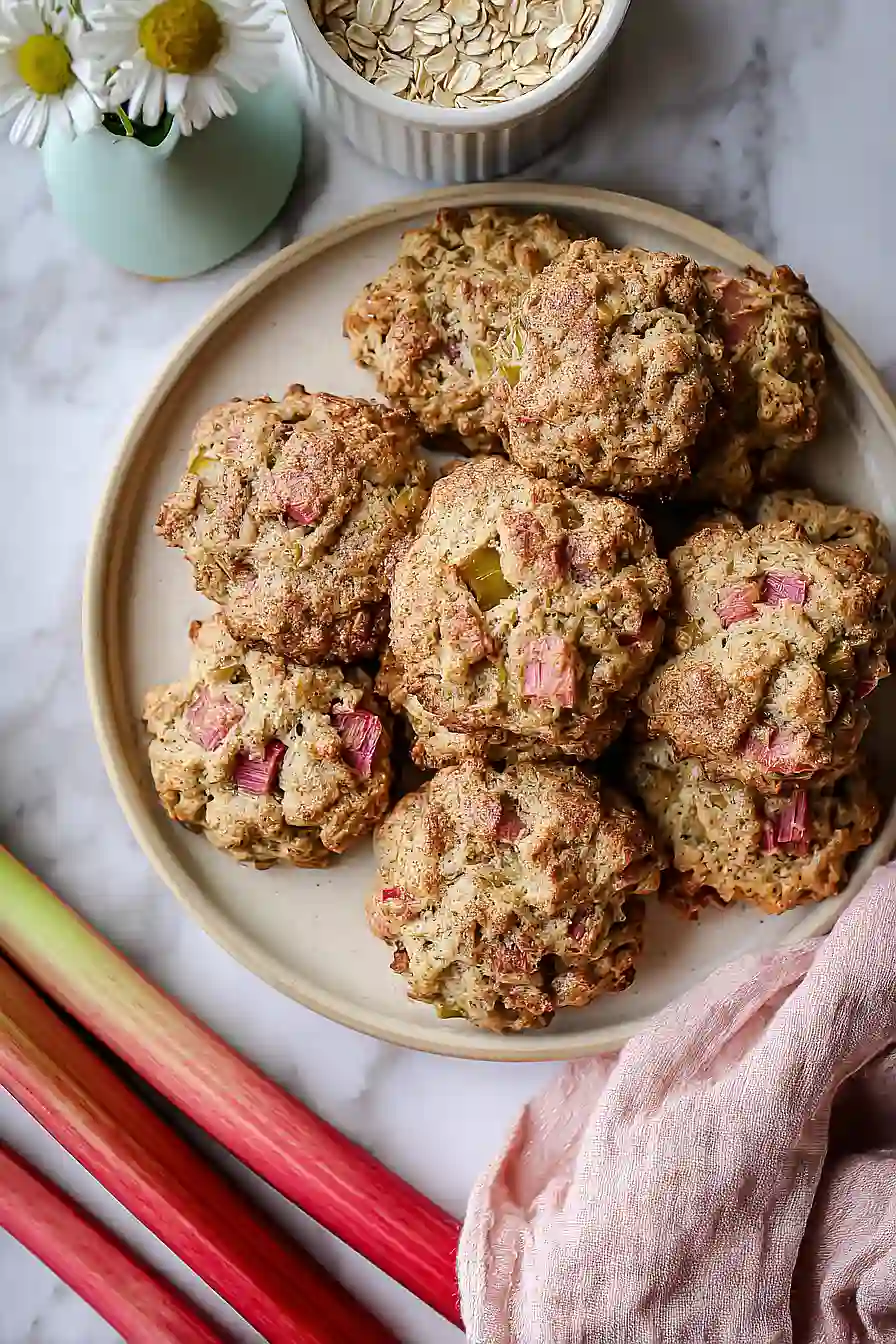
Why You’ll Love These Rhubarb Oatmeal Cookies
- Quick and easy – These cookies come together in under 35 minutes, making them perfect for when you need a homemade treat without spending all day in the kitchen.
- Unique twist on a classic – The tangy rhubarb adds a fresh, unexpected flavor to traditional oatmeal cookies that’ll have everyone asking for the recipe.
- Hearty and satisfying – Packed with oats, walnuts, and raisins, these cookies are filling enough to enjoy as a snack or even grab for breakfast on busy mornings.
- Great way to use rhubarb – If you’re looking for something different to do with your rhubarb besides pie, these cookies are a fun and delicious option.
What Kind of Rhubarb Should I Use?
Fresh rhubarb is your best bet for these cookies, and you’ll want to chop it into small pieces – about 1/4 to 1/2 inch – so it distributes evenly throughout the dough. The color of the stalks doesn’t really matter for flavor, though red stalks will give your cookies a prettier pink tint compared to green ones. If fresh rhubarb isn’t in season, you can use frozen rhubarb, but make sure to thaw it completely and pat it dry with paper towels to remove excess moisture before adding it to your cookie dough. Whatever you do, remember to trim off and discard the leaves, as they’re toxic – you only want to use the stalks for baking.
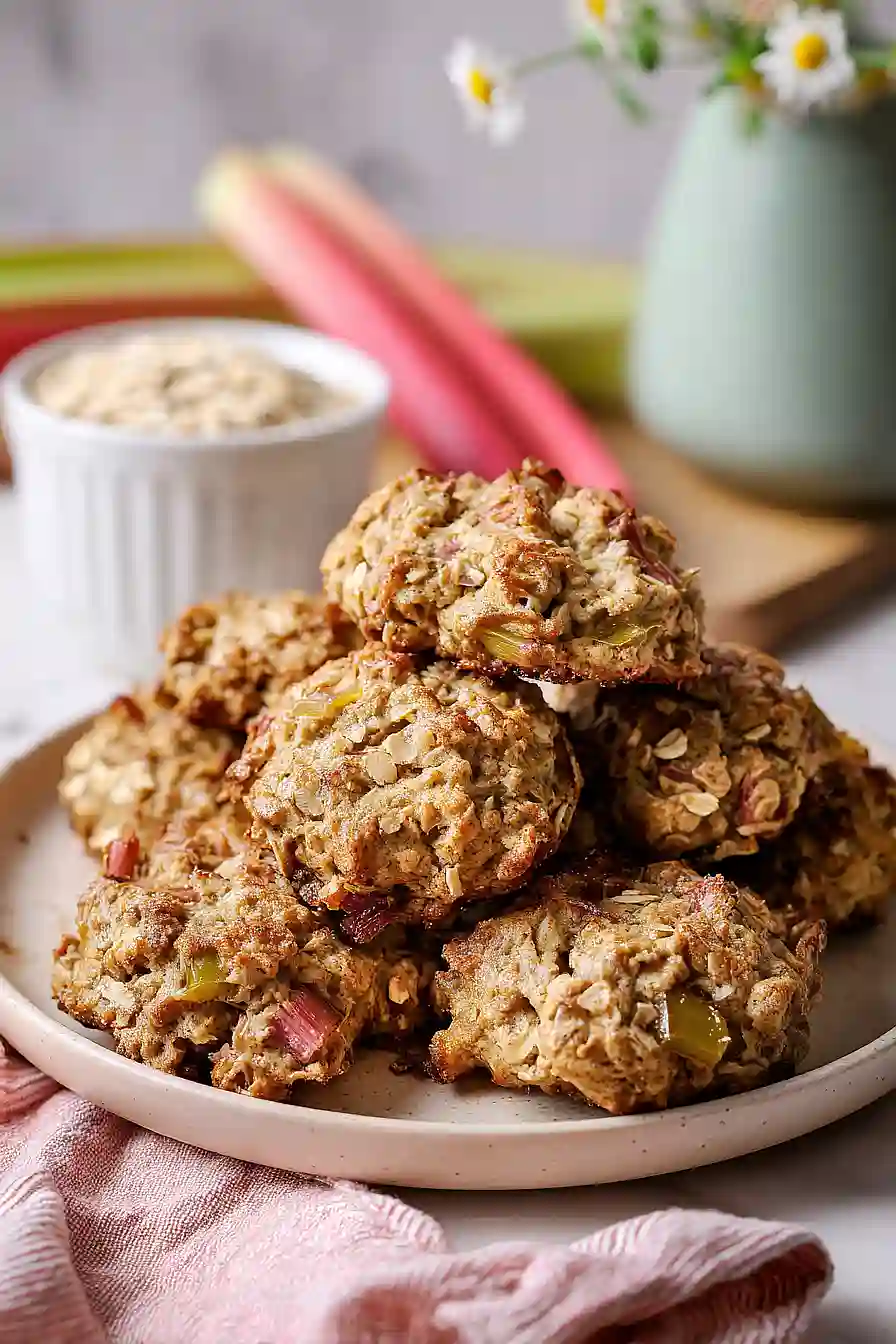
Options for Substitutions
These cookies are pretty forgiving when it comes to swapping ingredients:
- Butter: You can use coconut oil or vegetable oil instead, but stick with butter if you want that classic cookie flavor and texture.
- Rhubarb: Fresh rhubarb works best here, but if you’re using frozen, make sure to thaw it completely and pat it dry with paper towels to remove excess moisture before adding it to the dough.
- Walnuts: Not a fan of walnuts? Swap them out for pecans, almonds, or even chocolate chips. You can also leave them out completely if you prefer.
- Raisins: Dried cranberries, chopped dates, or dried cherries all work great in place of raisins. Or skip the dried fruit altogether if that’s not your thing.
- Oats: Old-fashioned rolled oats are what you need here – don’t substitute with quick oats or instant oatmeal, as they’ll make your cookies mushy instead of chewy.
- Brown sugar: If you’re out of brown sugar, mix 3/4 cup white sugar with 1 tablespoon of molasses to get the same result.
Watch Out for These Mistakes While Baking
The biggest mistake when making rhubarb oatmeal cookies is using wet or improperly prepared rhubarb, which can make your cookies spread too much and turn out flat – always dice the rhubarb into small pieces (about 1/4 inch) and pat them dry with paper towels before folding them into the dough.
Another common error is overmixing the dough once you add the flour mixture, which develops too much gluten and creates tough, chewy cookies instead of tender ones, so mix just until the ingredients are combined.
Since rhubarb releases moisture as it bakes, resist the urge to flatten the dough too much with your spoon – a gentle press is all you need, and the cookies will spread naturally in the oven.
Finally, don’t skip the step of letting your cookies cool on the baking sheet for a few minutes before transferring them to a wire rack, as they’ll be fragile when hot and need time to firm up.
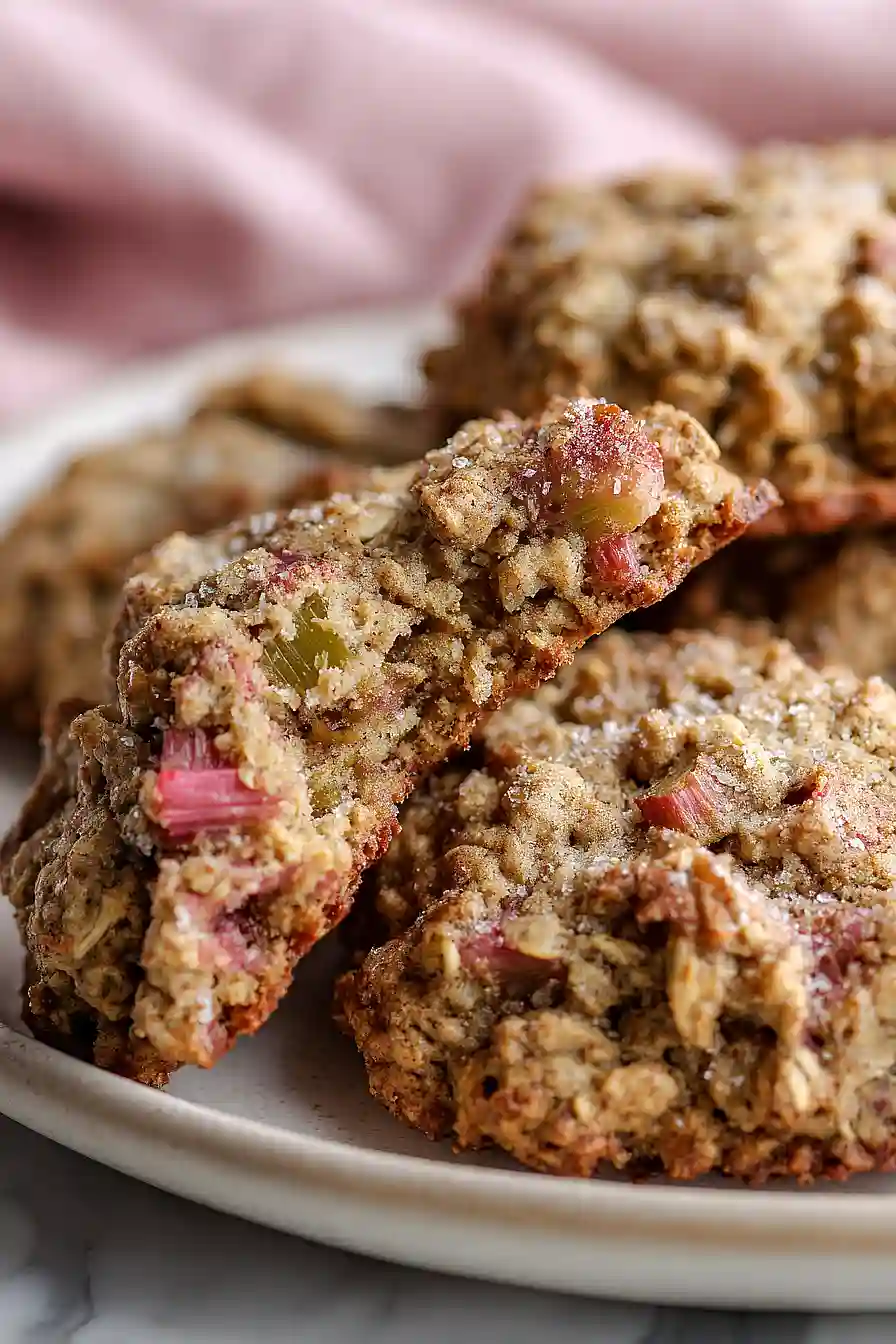
What to Serve With Rhubarb Oatmeal Cookies?
These cookies are perfect with a cold glass of milk or a hot cup of coffee in the afternoon when you need a little pick-me-up. I love serving them as a dessert alongside vanilla ice cream, which melts into the warm cookies and balances out the tartness of the rhubarb. They also make a great breakfast treat with Greek yogurt and fresh berries on the side. If you’re having people over, set out a platter of these cookies with some hot tea or lemonade for a simple but satisfying snack that everyone will enjoy.
Storage Instructions
Store: Keep these rhubarb oatmeal cookies in an airtight container at room temperature for up to 3 days. Because of the fresh rhubarb, they’re best enjoyed within the first couple of days when they’re at their peak freshness and the rhubarb hasn’t made them too soft.
Refrigerate: Since these cookies have fresh rhubarb in them, I actually prefer storing them in the fridge in an airtight container. They’ll stay fresh for up to a week this way, and the cool temperature helps keep the rhubarb from getting too mushy.
Freeze: These cookies freeze really well for up to 3 months. Just layer them between parchment paper in a freezer-safe container. You can also freeze the dough in balls on a baking sheet, then transfer to a freezer bag and bake them fresh whenever you want warm cookies.
| Preparation Time | 15-20 minutes |
| Cooking Time | 10-15 minutes |
| Total Time | 25-35 minutes |
| Level of Difficulty | Easy |
| Servings | 48 cookies |
Estimated Nutrition
Estimated nutrition for the whole recipe (without optional ingredients):
- Calories: 3300-3500
- Protein: 45-50 g
- Fat: 130-140 g
- Carbohydrates: 490-520 g
Ingredients
- 3/4 cup butter (I like Kerrygold unsalted butter for this)
- 3/4 cup brown sugar (packed to ensure the right moisture)
- 1/2 cup sugar
- 4 eggs (room temperature, about 70°F)
- 1 tsp vanilla
- 2 cups flour (I always use King Arthur all-purpose flour)
- 1.5 tsp baking soda
- 1.5 tsp cinnamon
- 1/4 tsp nutmeg
- 1/2 tsp salt
- 3 cups oats
- 3 cups rhubarb (diced into 1/2-inch pieces)
- 1 cup walnuts (chopped into 1/4-inch pieces for better distribution)
- 1/2 cup raisins
Step 1: Prepare Mise en Place and Preheat Oven
- 3 cups rhubarb
- 1 cup walnuts
- 2 cups flour
- 1.5 tsp baking soda
- 1.5 tsp cinnamon
- 1/4 tsp nutmeg
- 1/2 tsp salt
Preheat your oven to 375°F.
While it heats, dice the rhubarb into 1/2-inch pieces, chop the walnuts into 1/4-inch pieces, and measure out all dry ingredients.
I like to prep the rhubarb first and set it aside on a paper towel to absorb excess moisture—this prevents the cookies from becoming too wet.
Having everything measured and ready before you start mixing ensures a smooth, efficient baking process.
Step 2: Cream Butter and Sugars
- 3/4 cup butter
- 3/4 cup brown sugar
- 1/2 cup sugar
In a large bowl, combine the softened butter, packed brown sugar, and sugar.
Beat together until the mixture is light, fluffy, and pale—this typically takes 2-3 minutes with an electric mixer.
Creaming incorporates air into the dough, which helps the cookies rise and achieve a tender texture.
Make sure to scrape down the sides of the bowl to ensure even mixing.
Step 3: Add Eggs and Vanilla
- 4 eggs
- 1 tsp vanilla
Add the room-temperature eggs one at a time to the creamed butter and sugar mixture, beating well after each addition.
This prevents the batter from becoming curdled or separated.
Once all eggs are incorporated, add the vanilla and mix until fully combined.
Room-temperature eggs emulsify better with the butter, creating a smoother, more uniform batter.
Step 4: Combine Dry Ingredients
- 2 cups flour
- 1.5 tsp baking soda
- 1.5 tsp cinnamon
- 1/4 tsp nutmeg
- 1/2 tsp salt
In a separate bowl, whisk together the flour, baking soda, cinnamon, nutmeg, and salt.
Whisking ensures the leavening agents and spices are evenly distributed throughout the flour, preventing dry pockets in the baked cookies.
This step only takes a minute but makes a significant difference in the final texture and flavor consistency.
Step 5: Mix Wet and Dry Ingredients
- wet mixture from Step 3
- dry mixture from Step 4
Fold the dry ingredient mixture from Step 4 into the wet mixture from Step 3 using a spatula or wooden spoon.
Mix until just combined—do not overmix, as this can develop gluten and make the cookies tough.
The batter should look thick and slightly textured at this point.
Step 6: Fold in Oats, Rhubarb, Nuts, and Raisins
- 3 cups oats
- 3 cups rhubarb
- 1 cup walnuts
- 1/2 cup raisins
Gently fold in the oats, prepped rhubarb (drained of excess moisture), chopped walnuts, and raisins until evenly distributed throughout the dough.
I like to add the rhubarb last and fold it in gently to minimize breaking the pieces apart.
The dough will be thick and chunky—this is exactly what you want.
Step 7: Shape and Bake Cookies
- dough from Step 6
Drop spoonfuls of dough onto ungreased baking sheets, spacing them about 2 inches apart.
Gently flatten each mound slightly with the back of a spoon to create an even thickness—this helps them bake uniformly.
Bake for 9-12 minutes, until the edges are set but the centers still have a slight softness.
The cookies will continue to set as they cool, so remove them from the oven while they’re still just slightly underdone in the very center.
Irresistible Rhubarb Oatmeal Cookies
Ingredients
Method
- Preheat your oven to 375°F. While it heats, dice the rhubarb into 1/2-inch pieces, chop the walnuts into 1/4-inch pieces, and measure out all dry ingredients. I like to prep the rhubarb first and set it aside on a paper towel to absorb excess moisture—this prevents the cookies from becoming too wet. Having everything measured and ready before you start mixing ensures a smooth, efficient baking process.
- In a large bowl, combine the softened butter, packed brown sugar, and sugar. Beat together until the mixture is light, fluffy, and pale—this typically takes 2-3 minutes with an electric mixer. Creaming incorporates air into the dough, which helps the cookies rise and achieve a tender texture. Make sure to scrape down the sides of the bowl to ensure even mixing.
- Add the room-temperature eggs one at a time to the creamed butter and sugar mixture, beating well after each addition. This prevents the batter from becoming curdled or separated. Once all eggs are incorporated, add the vanilla and mix until fully combined. Room-temperature eggs emulsify better with the butter, creating a smoother, more uniform batter.
- In a separate bowl, whisk together the flour, baking soda, cinnamon, nutmeg, and salt. Whisking ensures the leavening agents and spices are evenly distributed throughout the flour, preventing dry pockets in the baked cookies. This step only takes a minute but makes a significant difference in the final texture and flavor consistency.
- Fold the dry ingredient mixture from Step 4 into the wet mixture from Step 3 using a spatula or wooden spoon. Mix until just combined—do not overmix, as this can develop gluten and make the cookies tough. The batter should look thick and slightly textured at this point.
- Gently fold in the oats, prepped rhubarb (drained of excess moisture), chopped walnuts, and raisins until evenly distributed throughout the dough. I like to add the rhubarb last and fold it in gently to minimize breaking the pieces apart. The dough will be thick and chunky—this is exactly what you want.
- Drop spoonfuls of dough onto ungreased baking sheets, spacing them about 2 inches apart. Gently flatten each mound slightly with the back of a spoon to create an even thickness—this helps them bake uniformly. Bake for 9-12 minutes, until the edges are set but the centers still have a slight softness. The cookies will continue to set as they cool, so remove them from the oven while they're still just slightly underdone in the very center.