Finding a creative way to use up spring rhubarb can be tough, especially when you’ve already made your third batch of pie this month. And let’s be honest, rhubarb isn’t exactly the first ingredient that comes to mind when you’re craving a cookie – most people stick with the usual chocolate chips or oatmeal raisins.
That’s where these vegan rhubarb cookies come in. They’re a fun twist on traditional cookies, perfectly balancing tart rhubarb with just the right amount of sweetness, and they happen to be completely plant-based without sacrificing any of that buttery, melt-in-your-mouth texture you expect from a good cookie.

Why You’ll Love These Vegan Rhubarb Cookies
- Quick and easy – These cookies come together in under 45 minutes, making them perfect for when you need a sweet treat without spending hours in the kitchen.
- Vegan-friendly – Made with plant-based ingredients like vegan butter and egg replacer, these cookies are completely dairy-free and egg-free without sacrificing flavor or texture.
- Unique flavor combination – The tangy rhubarb paired with bright lemon creates a refreshing twist on traditional cookies that’s perfect for spring and summer.
- Simple pantry ingredients – Most of these ingredients are things you probably already have on hand, with rhubarb being the star ingredient that makes them special.
What Kind of Rhubarb Should I Use?
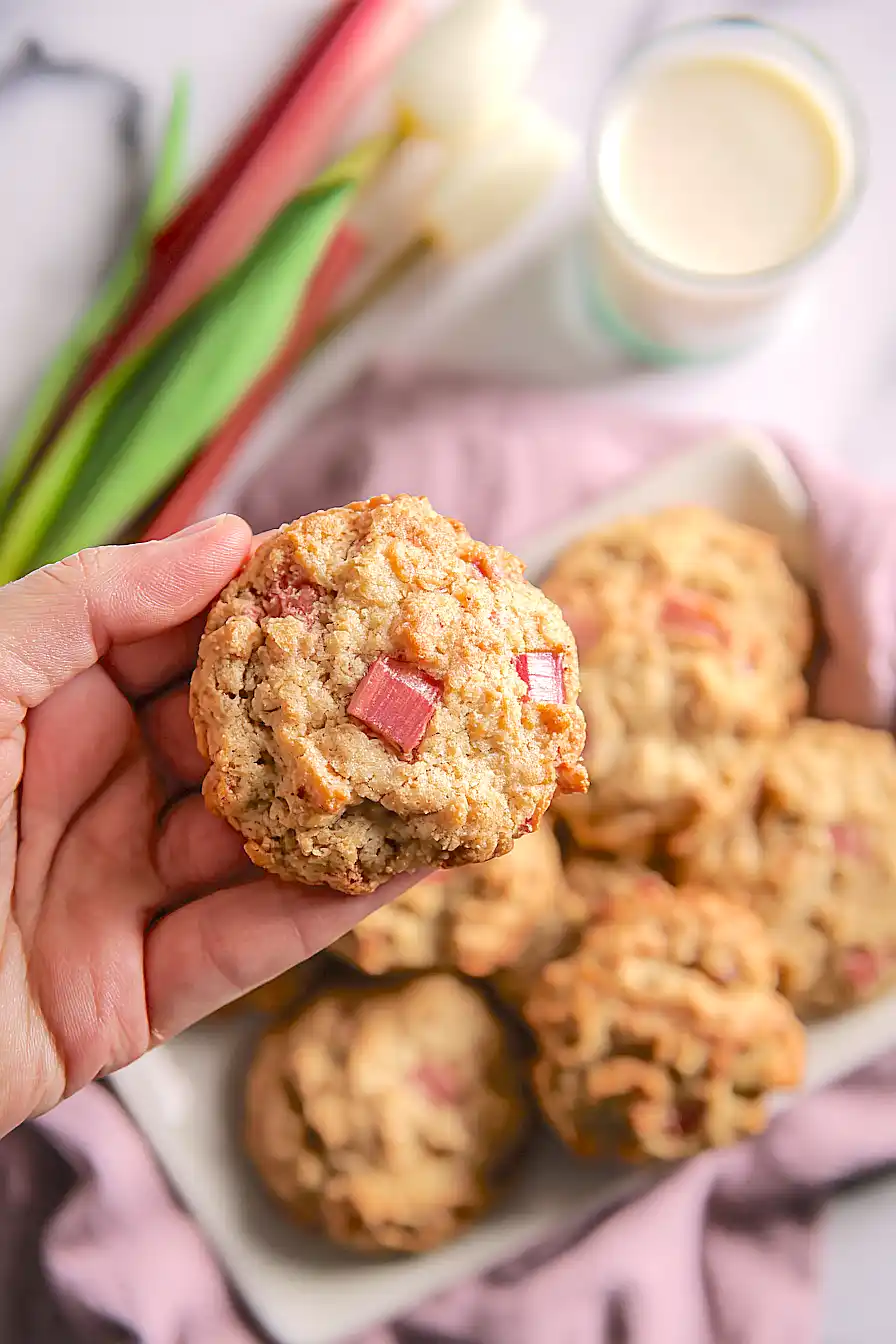
Fresh rhubarb is your best bet for these cookies, and you’ll want to look for stalks that are firm and crisp without any soft spots. The color of rhubarb can range from pale pink to deep red, but don’t worry – the color doesn’t affect the flavor, so either will work perfectly fine. You’ll need to trim off the leaves (which are toxic) and the bottom ends, then chop the stalks into small pieces so they distribute evenly throughout the cookies. If fresh rhubarb isn’t available, you can use frozen rhubarb in a pinch, just make sure to thaw it completely and drain off any excess liquid before adding it to your dough.
Options for Substitutions
This recipe is pretty forgiving, so here are some swaps you can make based on what you have:
- Vegan butter: You can use coconut oil as a substitute – just make sure it’s at room temperature so it creams properly with the sugar. Regular butter works too if you’re not strictly vegan.
- Egg replacer: If you don’t have commercial egg replacer, try using a flax egg (1 tablespoon ground flaxseed mixed with 3 tablespoons water, let sit for 5 minutes) or 1/4 cup unsweetened applesauce.
- Almond milk: Any plant-based milk works here – oat milk, soy milk, or coconut milk are all fine. You can even use regular dairy milk if you’re not keeping it vegan.
- Rhubarb: This is the star ingredient, so I wouldn’t recommend swapping it out. If your rhubarb is particularly tart, you might want to add an extra tablespoon or two of sugar to balance it out.
- Brown sugar: You can use all white sugar if that’s what you have, though you’ll lose a bit of that caramel-like depth. Or go all brown sugar for a richer flavor.
- Lemon: Fresh lemon is best here, but bottled lemon juice will work in a pinch. You can skip the zest if needed, though it does add a nice citrus pop.
Watch Out for These Mistakes While Baking
The biggest mistake with rhubarb cookies is adding too much moisture from the rhubarb, which can make your cookies spread too thin and turn out flat – chop your rhubarb into small pieces (about 1/4 inch) and pat them dry with paper towels before mixing them into the dough.
Another common error is overmixing once you add the dry ingredients to the wet, which develops too much gluten and creates tough, dense cookies instead of tender ones – mix just until the flour disappears.
Since rhubarb releases liquid as it bakes, these cookies benefit from a slightly longer baking time than regular cookies, so don’t pull them out too early even if they look a bit underdone.
For the best texture, let the cookies cool completely on the baking sheet for about 5 minutes before transferring them to a cooling rack, as they’ll firm up during this time and won’t fall apart.
What to Serve With Vegan Rhubarb Cookies?
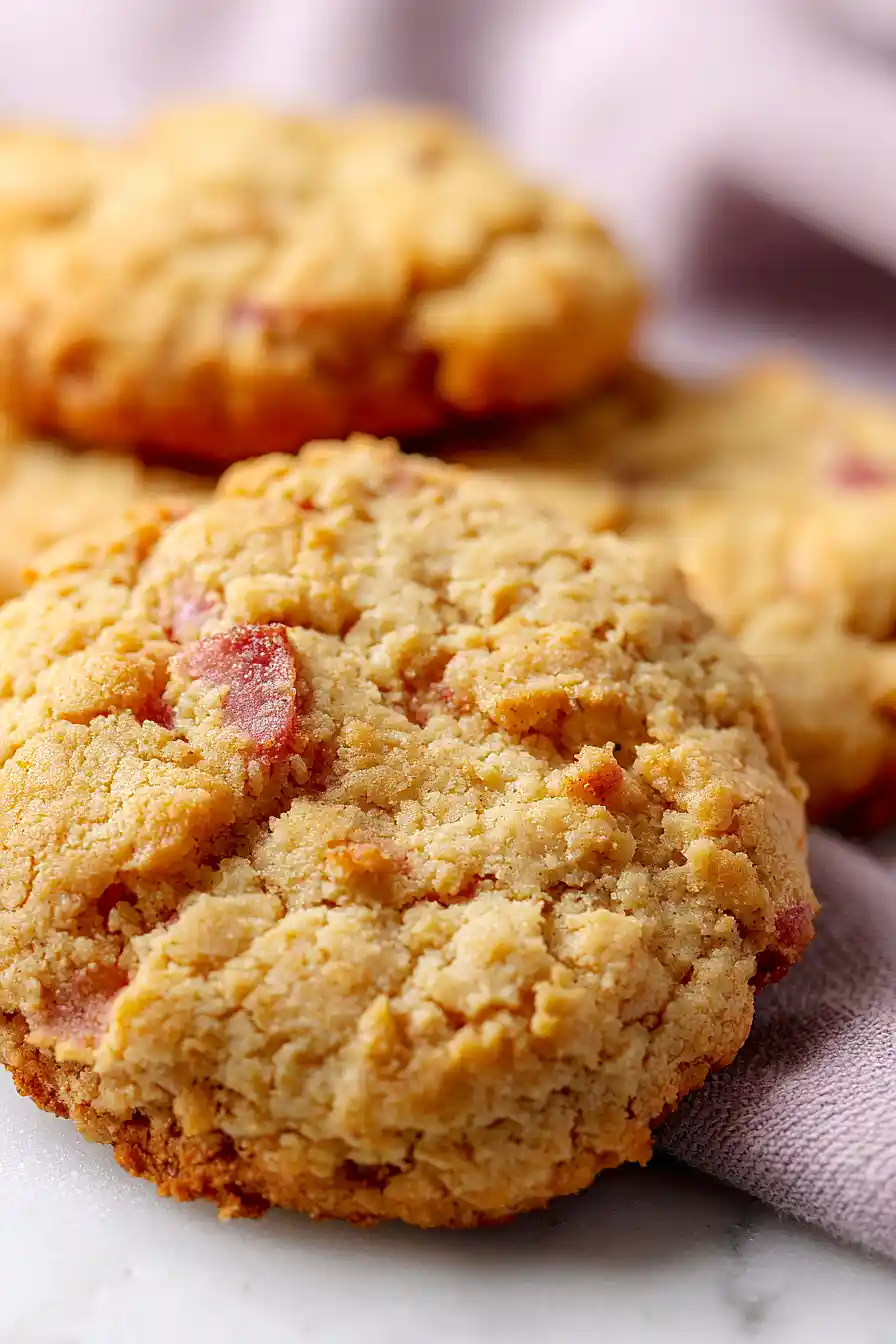
These cookies are perfect alongside a cup of hot tea or coffee for an afternoon snack, especially since the tart rhubarb and bright lemon flavors pair nicely with something warm to drink. I love serving them with a scoop of vanilla coconut milk ice cream for dessert, which balances out the tanginess of the rhubarb. They’re also great packed into lunchboxes or brought to potlucks since they’re dairy-free and easy to share. If you want to make them extra special, try serving them warm with a drizzle of vegan lemon glaze or a dollop of coconut whipped cream on top.
Storage Instructions
Store: Keep your rhubarb cookies in an airtight container at room temperature for up to 3 days, or in the fridge for up to a week. They stay soft and chewy when stored properly, just make sure they’re completely cooled before sealing them up.
Freeze: These cookies freeze really well for up to 3 months. You can freeze the baked cookies in a freezer-safe container with parchment paper between layers, or freeze the dough in balls on a baking sheet before transferring to a bag. Frozen dough can go straight into the oven, just add a couple extra minutes to the baking time.
Enjoy: Thaw frozen cookies at room temperature for about 30 minutes before eating. If you want them warm and fresh-tasting, pop them in a 300°F oven for 5 minutes to bring back that just-baked texture.
| Preparation Time | 20-30 minutes |
| Cooking Time | 10-15 minutes |
| Total Time | 30-45 minutes |
| Level of Difficulty | Easy |
| Servings | 24 cookies |
Estimated Nutrition
Estimated nutrition for the whole recipe (without optional ingredients):
- Calories: 2200-2400
- Protein: 18-22 g
- Fat: 82-90 g
- Carbohydrates: 360-380 g
Ingredients
For the dry ingredients:
- 2.25 cups flour (I always use King Arthur all-purpose flour)
- 1 tbsp baking powder
- 1 tsp salt
For the wet ingredients:
- 3/4 cup vegan butter (I like Miyoko’s Creamery for the best buttery texture)
- 1/4 cup brown sugar (packed firmly)
- 1/4 cup sugar
- 1 egg replacer
- 1/2 cup almond milk
- 2 tbsp lemon juice (freshly squeezed for best acidity)
- 1 tsp vanilla extract
For the mix-ins:
- 1.5 cups rhubarb (cut into 1/4-inch small dice)
- 1 lemon zest
Step 1: Prepare Mise en Place and Preheat
- 1.5 cups rhubarb
- 1 lemon zest
- 2 tbsp lemon juice
Preheat your oven to 350°F and line a baking sheet with parchment paper.
While the oven heats, dice the rhubarb into small 1/4-inch pieces and place in a bowl—this prevents it from being distributed unevenly in the dough.
Zest the lemon and squeeze the juice fresh; I always use fresh lemon juice rather than bottled because it has much better acidity and brightens the cookie flavor significantly.
Set all prepared ingredients within arm’s reach of your mixing area.
Step 2: Cream the Wet Ingredients
- 3/4 cup vegan butter
- 1/4 cup brown sugar
- 1/4 cup sugar
In a large mixing bowl, combine the softened vegan butter, packed brown sugar, and sugar.
Beat these together until the mixture is light, fluffy, and pale—this usually takes about 2-3 minutes with an electric mixer or vigorous hand mixing.
This creaming process incorporates air into the dough, which helps the cookies rise and achieve a tender crumb.
The vegan butter I use from Miyoko’s Creamery whips beautifully and creates a genuinely buttery texture in the final cookie.
Step 3: Combine Dry Ingredients
- 2.25 cups flour
- 1 tbsp baking powder
- 1 tsp salt
In a separate bowl, whisk together the flour, baking powder, and salt until evenly combined.
This whisking distributes the leavening agent and salt throughout the flour, ensuring they’ll be evenly incorporated into the dough rather than creating pockets of concentrated baking powder flavor.
Step 4: Build the Cookie Dough
- dry ingredient mixture from Step 3
- 1 egg replacer
- 1/2 cup almond milk
- 1 tsp vanilla extract
- prepared rhubarb, lemon zest, and lemon juice from Step 1
Add the dry ingredient mixture from Step 3 to the creamed wet ingredients from Step 2, stirring until just combined—don’t overmix, as this can develop gluten and create tough cookies.
Pour in the egg replacer and almond milk, mixing until the dough comes together.
Fold in the lemon zest, lemon juice, and diced rhubarb from Step 1, distributing the fruit evenly throughout the dough.
I like to fold the rhubarb in gently near the end so it stays intact and creates those lovely tart pockets in each cookie.
Step 5: Shape and Bake the Cookies
- dough from Step 4
Using a spoon or small cookie scoop, drop rounded spoonfuls of dough onto the prepared baking sheet, spacing them about 2 inches apart to allow for slight spreading.
Bake in the preheated 350°F oven for 15 minutes, until the edges are lightly golden and the centers are just set—the cookies will continue to cook slightly as they cool on the pan.
Remove from the oven and let the cookies rest on the baking sheet for 5 minutes before transferring to a wire rack to cool completely.
Homemade Vegan Rhubarb Cookies
Ingredients
Method
- Preheat your oven to 350°F and line a baking sheet with parchment paper. While the oven heats, dice the rhubarb into small 1/4-inch pieces and place in a bowl—this prevents it from being distributed unevenly in the dough. Zest the lemon and squeeze the juice fresh; I always use fresh lemon juice rather than bottled because it has much better acidity and brightens the cookie flavor significantly. Set all prepared ingredients within arm's reach of your mixing area.
- In a large mixing bowl, combine the softened vegan butter, packed brown sugar, and sugar. Beat these together until the mixture is light, fluffy, and pale—this usually takes about 2-3 minutes with an electric mixer or vigorous hand mixing. This creaming process incorporates air into the dough, which helps the cookies rise and achieve a tender crumb. The vegan butter I use from Miyoko's Creamery whips beautifully and creates a genuinely buttery texture in the final cookie.
- In a separate bowl, whisk together the flour, baking powder, and salt until evenly combined. This whisking distributes the leavening agent and salt throughout the flour, ensuring they'll be evenly incorporated into the dough rather than creating pockets of concentrated baking powder flavor.
- Add the dry ingredient mixture from Step 3 to the creamed wet ingredients from Step 2, stirring until just combined—don't overmix, as this can develop gluten and create tough cookies. Pour in the egg replacer and almond milk, mixing until the dough comes together. Fold in the lemon zest, lemon juice, and diced rhubarb from Step 1, distributing the fruit evenly throughout the dough. I like to fold the rhubarb in gently near the end so it stays intact and creates those lovely tart pockets in each cookie.
- Using a spoon or small cookie scoop, drop rounded spoonfuls of dough onto the prepared baking sheet, spacing them about 2 inches apart to allow for slight spreading. Bake in the preheated 350°F oven for 15 minutes, until the edges are lightly golden and the centers are just set—the cookies will continue to cook slightly as they cool on the pan. Remove from the oven and let the cookies rest on the baking sheet for 5 minutes before transferring to a wire rack to cool completely.