If you ask me, spinach pesto is one of those recipes that just makes sense.
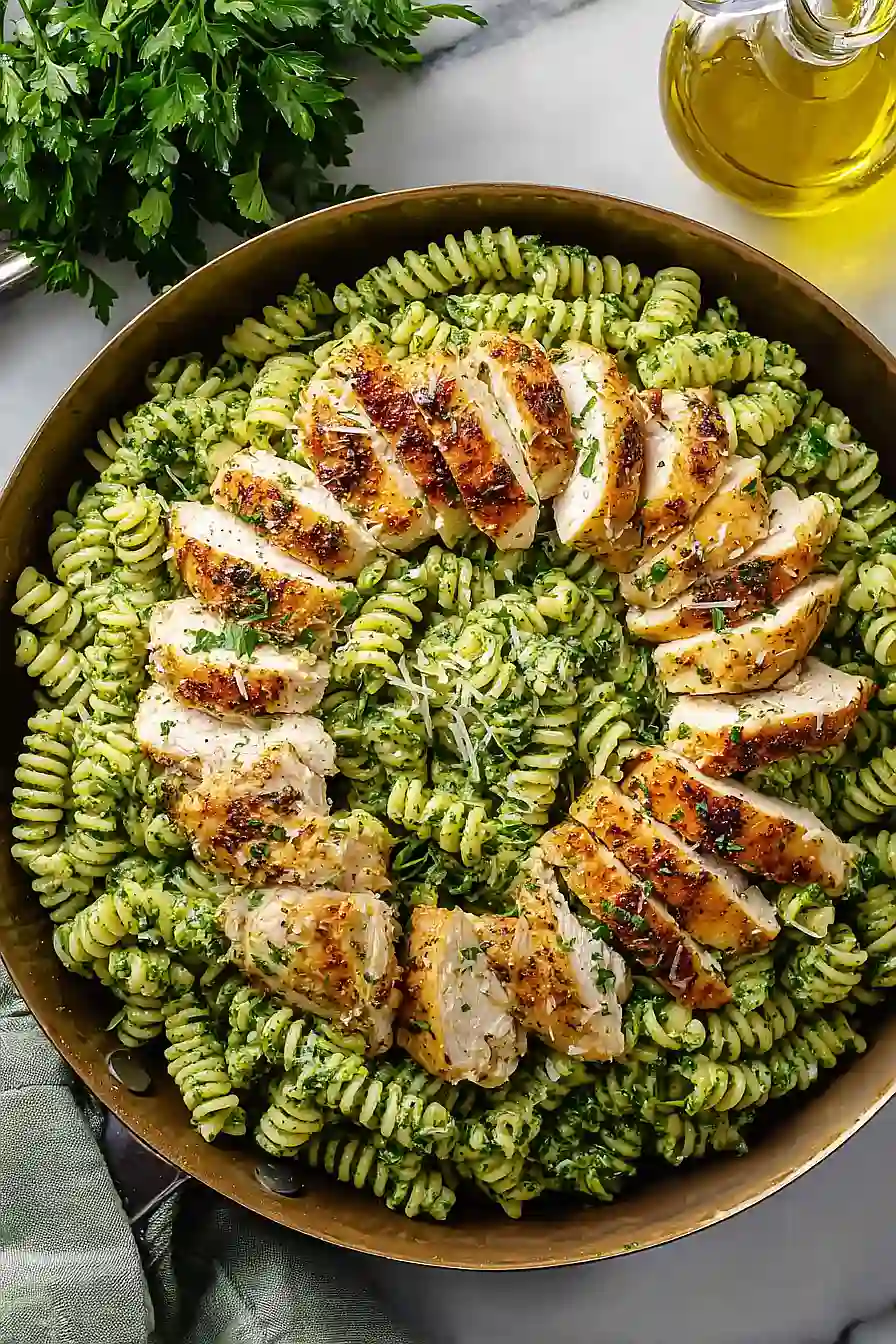
This weeknight pasta dish brings together fresh spinach pesto with seasoned chicken strips and your favorite penne. The pesto swaps out traditional basil for baby spinach and almonds, creating a sauce that’s nutty and bright with lemon.
The chicken gets coated in Italian seasoning and black pepper, then cooked until golden in a hot skillet. A pinch of red pepper flakes and fresh parmesan help the whole thing come together.
It’s a family-friendly dinner that feels special but comes together in about 30 minutes, perfect for busy evenings when you want something satisfying.
Why You’ll Love This Spinach Pesto Pasta with Chicken
- Quick weeknight dinner – Ready in just 30-45 minutes, this recipe is perfect for busy evenings when you want something homemade without spending hours in the kitchen.
- Healthy and nutritious – Packed with spinach, lean chicken breast, and almonds, you’re getting plenty of protein and greens in one satisfying meal.
- Fresh, homemade pesto – Making your own spinach pesto is easier than you think, and it tastes so much better than store-bought versions. Plus, you control exactly what goes in it.
- Simple ingredients – Everything you need is straightforward and easy to find at your local grocery store, with no fancy or hard-to-pronounce items required.
- Complete meal in one dish – With pasta, protein, and greens all together, you don’t need to worry about making side dishes to round out dinner.
What Kind of Pasta Should I Use?
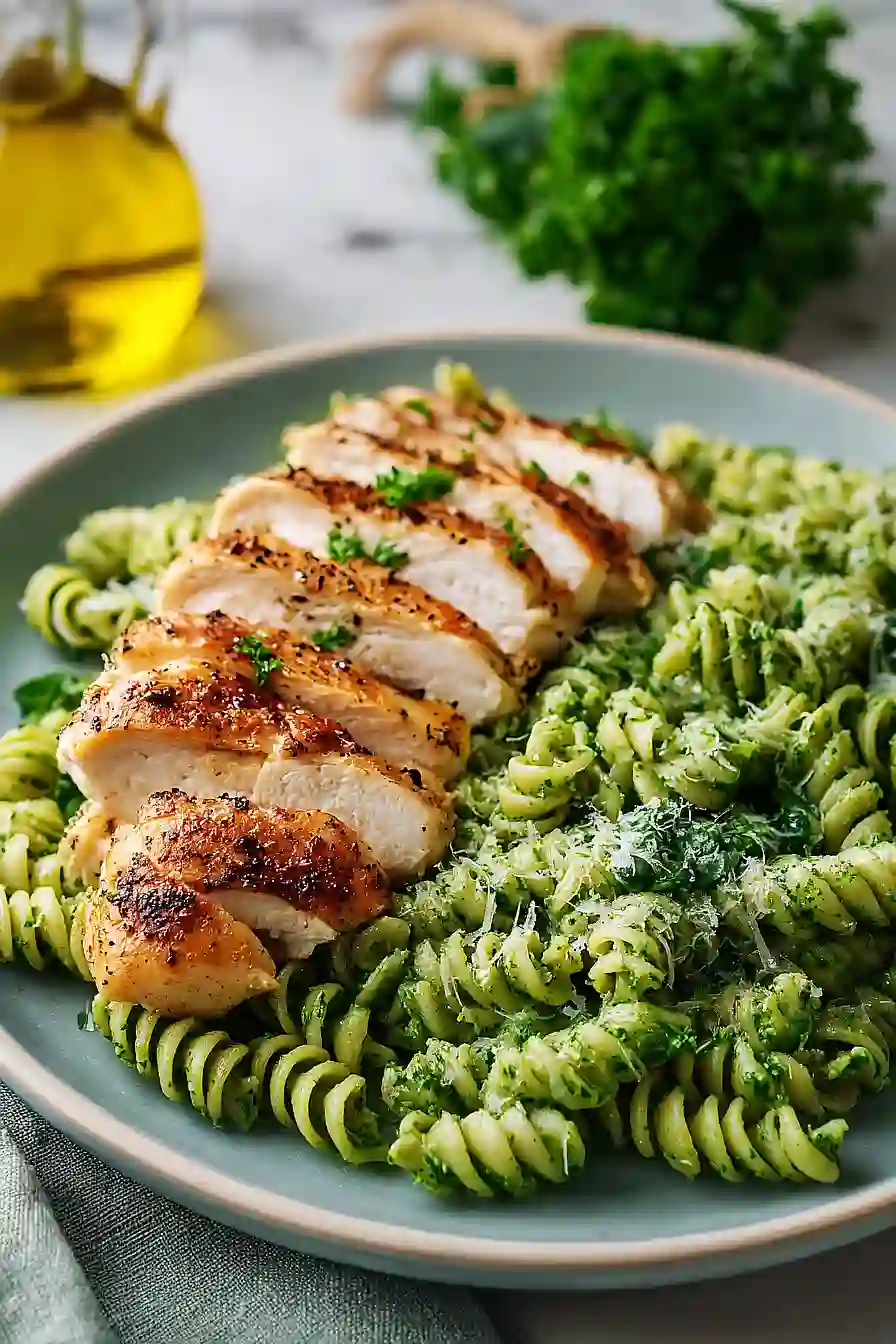
Any dried pasta shape will work great for this recipe, so feel free to use whatever you have in your pantry. Short pasta shapes like penne, fusilli, or farfalle are perfect because they catch the pesto in their ridges and curves, but long pasta like spaghetti or linguine works just as well. If you’re gluten-free, you can swap in your favorite gluten-free pasta without any issues – just follow the cooking instructions on the package since cooking times can vary. The key is to cook your pasta al dente so it has a nice bite to it and doesn’t get mushy when you toss it with the pesto.
Options for Substitutions
This recipe is super adaptable, so feel free to work with what you have in your kitchen:
- Baby spinach: Regular spinach works just fine – just remove any thick stems first. You can also mix in some fresh basil (about 1 cup spinach + 1 cup basil) for a more traditional pesto flavor.
- Raw almonds: Pine nuts are the classic choice for pesto, but they’re pricey. Walnuts, cashews, or sunflower seeds all make great substitutes and won’t change the recipe at all.
- Olive oil: You can use a neutral oil like avocado or grapeseed oil if you prefer a milder taste, though olive oil does give the pesto that authentic flavor.
- Chicken breasts: Chicken thighs work great here and stay juicier during cooking. You can also skip the chicken entirely for a vegetarian version, or swap in shrimp or grilled tofu.
- Dried pasta: Any pasta shape works – penne, fusilli, or spaghetti are all good choices. Whole wheat or chickpea pasta can be used for a different nutritional profile.
- Lemon juice: In a pinch, white wine vinegar or apple cider vinegar (use about 2 tablespoons) can provide that bright, tangy note the pesto needs.
Watch Out for These Mistakes While Cooking
The biggest mistake with homemade pesto is not adding enough salt – since you’re skipping the traditional Parmesan cheese, you’ll need to taste and adjust the seasoning generously or your pesto will taste flat and bland.
Overcooking chicken breasts is another common issue, so use an instant-read thermometer and remove them from the heat when they reach 155°F in the thickest part, letting carryover cooking bring them to a safe 165°F while keeping them juicy.
Don’t forget to save that pasta water before draining – the starchy liquid is essential for loosening the pesto and helping it coat the pasta properly, so reserve at least a cup even if you think you won’t need it all.
Finally, make sure to toss the pesto with the pasta while it’s still hot, as the warmth helps the sauce spread evenly and prevents clumping.
What to Serve With Spinach Pesto Pasta?
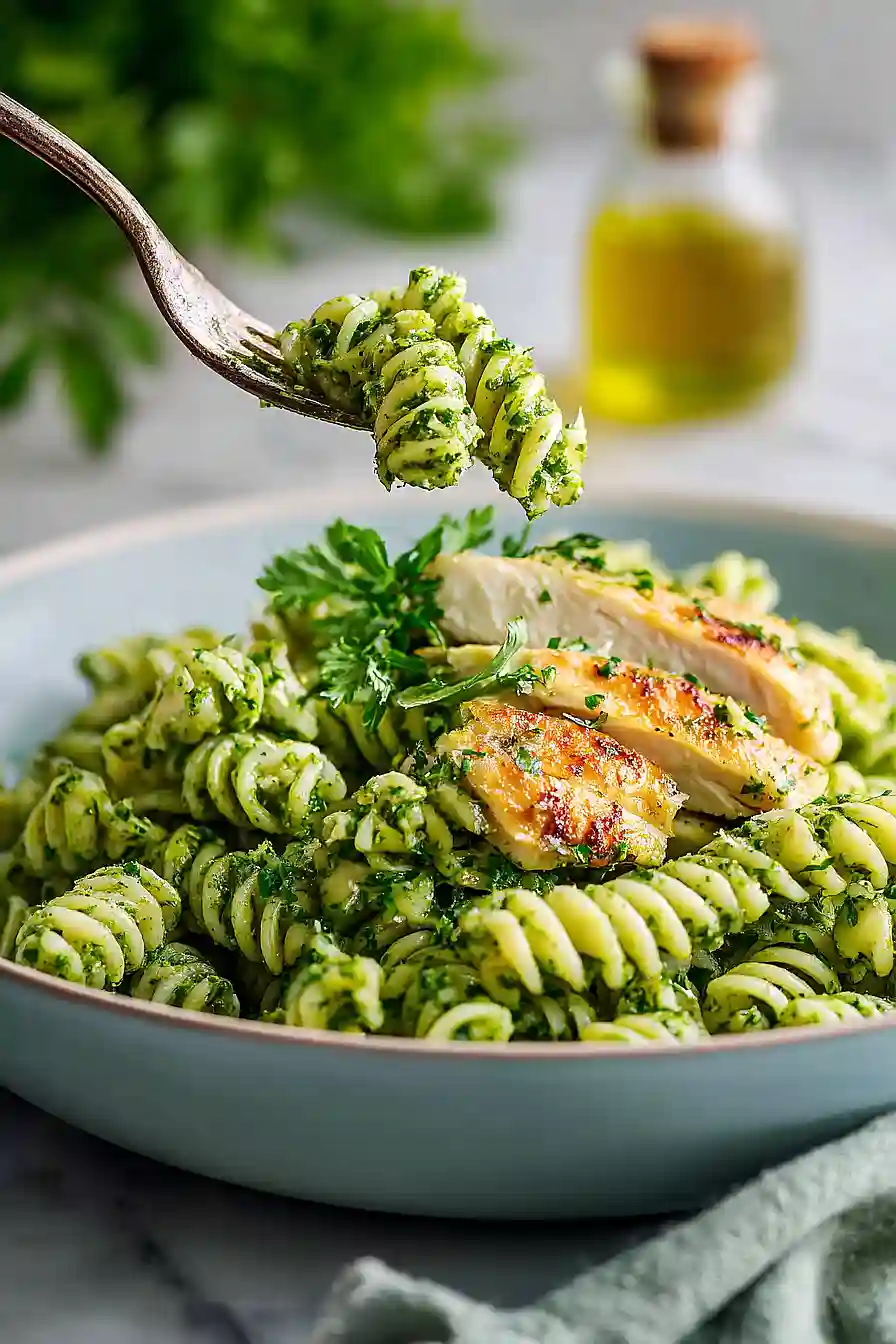
This pasta is pretty filling on its own, but I love serving it with a simple side salad dressed with olive oil and lemon juice to keep things fresh and light. Garlic bread or a warm baguette is always a good call if you want something to mop up any extra pesto from your bowl. A crisp white wine like Pinot Grigio or Sauvignon Blanc pairs really nicely with the lemony, herby flavors in this dish. If you’re feeding a crowd, roasted vegetables like zucchini, bell peppers, or cherry tomatoes make a great addition to round out the meal.
Storage Instructions
Store: Keep your leftover pasta in an airtight container in the fridge for up to 3 days. The pesto might darken a bit, but that’s totally normal and doesn’t affect the taste. If you want to keep the pesto extra green, you can store it separately with a thin layer of olive oil on top.
Freeze: The spinach pesto freezes really well on its own for up to 3 months in a freezer-safe container or ice cube trays for easy portions. I wouldn’t recommend freezing the whole pasta dish though, since the texture can get a bit mushy when reheated.
Reheat: Warm up your pasta in a skillet over medium-low heat with a splash of water or olive oil to loosen things up. You can also microwave it in 30-second intervals, stirring between each one. The chicken might dry out a bit, so adding a little extra pesto or olive oil helps bring it back to life.
| Preparation Time | 10-15 minutes |
| Cooking Time | 20-30 minutes |
| Total Time | 30-45 minutes |
| Level of Difficulty | Medium |
| Servings | 4 servings |
Estimated Nutrition
Estimated nutrition for the whole recipe (without optional ingredients):
- Calories: 2000-2200
- Protein: 90-110 g
- Fat: 110-125 g
- Carbohydrates: 170-190 g
Ingredients
For the spinach pesto:
- 2 cups baby spinach (tightly packed)
- 1/2 cup raw almonds
- 2 garlic cloves
- 1.5 tablespoons fresh lemon juice
- 1/2 teaspoon salt
- 1/2 cup extra virgin olive oil
- 1/4 cup grated parmesan cheese
For the chicken:
- 2 large chicken breasts (sliced into 1-inch strips)
- 1/2 teaspoon salt
- 1/2 teaspoon black pepper
- 1.5 teaspoons McCormick Italian Seasoning
- 1 tablespoon olive oil
- 1/4 teaspoon red pepper flakes
For the pasta and garnish:
- 12 oz Barilla Penne pasta
- 2 tablespoons fresh parsley, chopped
- Fresh lemon wedges
Step 1: Make the Spinach Pesto
- 2 cups baby spinach
- 1/2 cup raw almonds
- 2 garlic cloves
- 1.5 tablespoons fresh lemon juice
- 1/2 teaspoon salt
- 1/2 cup extra virgin olive oil
- 1/4 cup grated parmesan cheese
Add the baby spinach, raw almonds, garlic cloves, fresh lemon juice, and salt to a food processor.
Pulse until roughly combined, then slowly drizzle in the extra virgin olive oil while the processor runs, creating a chunky pesto texture.
Stir in the grated parmesan cheese by hand to preserve its texture.
Set aside until ready to toss with pasta—the pesto can be made up to a few hours ahead and stored in the refrigerator.
Step 2: Season and Sear the Chicken
- 2 large chicken breasts
- 1/2 teaspoon salt
- 1/2 teaspoon black pepper
- 1.5 teaspoons McCormick Italian Seasoning
- 1 tablespoon olive oil
- 1/4 teaspoon red pepper flakes
Pat the sliced chicken breasts dry with paper towels, then season both sides generously with salt, black pepper, Italian seasoning, and red pepper flakes.
Heat 1 tablespoon of olive oil in a large skillet over medium-high heat until shimmering.
Working in batches if needed to avoid crowding the pan, sear the chicken strips for 5-6 minutes per side until golden brown and cooked through (internal temperature should reach 165°F).
I like to let the chicken develop a nice golden crust before flipping—this takes about 5 minutes, so resist the urge to move it around too much.
Transfer to a clean plate when done.
Step 3: Cook the Pasta
- 12 oz Barilla Penne pasta
While the chicken cooks, bring a large pot of salted water to a rolling boil.
Add the penne pasta and cook for 10 minutes or until al dente (tender but still slightly firm to the bite).
Before draining, scoop out and reserve 1 cup of the starchy pasta water—this liquid is essential for adjusting the consistency of the pesto when tossing.
Drain the pasta in a colander but don’t rinse it, as the residual starch helps the pesto coat the noodles.
Step 4: Combine Pasta, Pesto, and Chicken
- spinach pesto from Step 1
- cooked pasta from Step 3
- reserved pasta water from Step 3
- seared chicken from Step 2
Return the cooked pasta to the large pot (off heat) and add the spinach pesto from Step 1, stirring gently to coat every strand.
Add pasta water from Step 3 a few tablespoons at a time, tossing until the pesto reaches your desired consistency—you want it creamy and clinging to the pasta, not dry or too thick.
Top with the seared chicken from Step 2 and gently fold it in, being careful not to break the strips.
For a lighter dish, I prefer to arrange the chicken on top rather than fully mixing it in, which keeps it visually appealing and prevents it from breaking apart.
Step 5: Plate and Serve
- 2 tablespoons fresh parsley, chopped
- Fresh lemon wedges
Divide the pasta among serving bowls or plates, ensuring each portion has chicken and pesto evenly distributed.
Garnish with fresh chopped parsley and serve immediately with fresh lemon wedges on the side for brightness and acidity.
Creamy Spinach Pesto Pasta with Chicken
Ingredients
Method
- Add the baby spinach, raw almonds, garlic cloves, fresh lemon juice, and salt to a food processor. Pulse until roughly combined, then slowly drizzle in the extra virgin olive oil while the processor runs, creating a chunky pesto texture. Stir in the grated parmesan cheese by hand to preserve its texture. Set aside until ready to toss with pasta—the pesto can be made up to a few hours ahead and stored in the refrigerator.
- Pat the sliced chicken breasts dry with paper towels, then season both sides generously with salt, black pepper, Italian seasoning, and red pepper flakes. Heat 1 tablespoon of olive oil in a large skillet over medium-high heat until shimmering. Working in batches if needed to avoid crowding the pan, sear the chicken strips for 5-6 minutes per side until golden brown and cooked through (internal temperature should reach 165°F). I like to let the chicken develop a nice golden crust before flipping—this takes about 5 minutes, so resist the urge to move it around too much. Transfer to a clean plate when done.
- While the chicken cooks, bring a large pot of salted water to a rolling boil. Add the penne pasta and cook for 10 minutes or until al dente (tender but still slightly firm to the bite). Before draining, scoop out and reserve 1 cup of the starchy pasta water—this liquid is essential for adjusting the consistency of the pesto when tossing. Drain the pasta in a colander but don't rinse it, as the residual starch helps the pesto coat the noodles.
- Return the cooked pasta to the large pot (off heat) and add the spinach pesto from Step 1, stirring gently to coat every strand. Add pasta water from Step 3 a few tablespoons at a time, tossing until the pesto reaches your desired consistency—you want it creamy and clinging to the pasta, not dry or too thick. Top with the seared chicken from Step 2 and gently fold it in, being careful not to break the strips. For a lighter dish, I prefer to arrange the chicken on top rather than fully mixing it in, which keeps it visually appealing and prevents it from breaking apart.
- Divide the pasta among serving bowls or plates, ensuring each portion has chicken and pesto evenly distributed. Garnish with fresh chopped parsley and serve immediately with fresh lemon wedges on the side for brightness and acidity.